
Evaluating Qantas Premium Economy International
Flying across the globe demands a serious strategy for physical comfort, and understanding the specific benefits of Qantas Premium Economy International can drastically change your long-haul aviation experience. When you face a 15-hour flight from Sydney to Los Angeles or a marathon journey from Perth to London, the gap between standard seating and business class can seem massive. This intermediate cabin class serves as the perfect bridge, offering substantially more space, enhanced dining options, and an exclusive atmosphere without the exorbitant price tag of a lie-flat bed. Navigating ultra-long-haul routes requires knowing exactly what you are paying for when selecting your fare.
The Australian flag carrier has invested heavily in creating a distinct product rather than just adding a few inches of legroom to standard economy. By isolating this cabin, giving it dedicated crew members, and upgrading the physical hardware, airlines recognize that travelers need functional, comfortable workspaces and sleeping environments. If you want to arrive at your destination refreshed, analyzing the exact seat specifications, priority ground services, and onboard amenities becomes essential. The choice of aircraft—whether the Airbus A380 or the Boeing 787 Dreamliner—also dictates the level of comfort and technological advancement you will experience at 35,000 feet.
Read also: Mastering Little Yarns: A Complete Guide for Crafters; Can You Make Money On TikTok In Australia? Guide.
The Core Value of Upgraded Long-Haul Travel
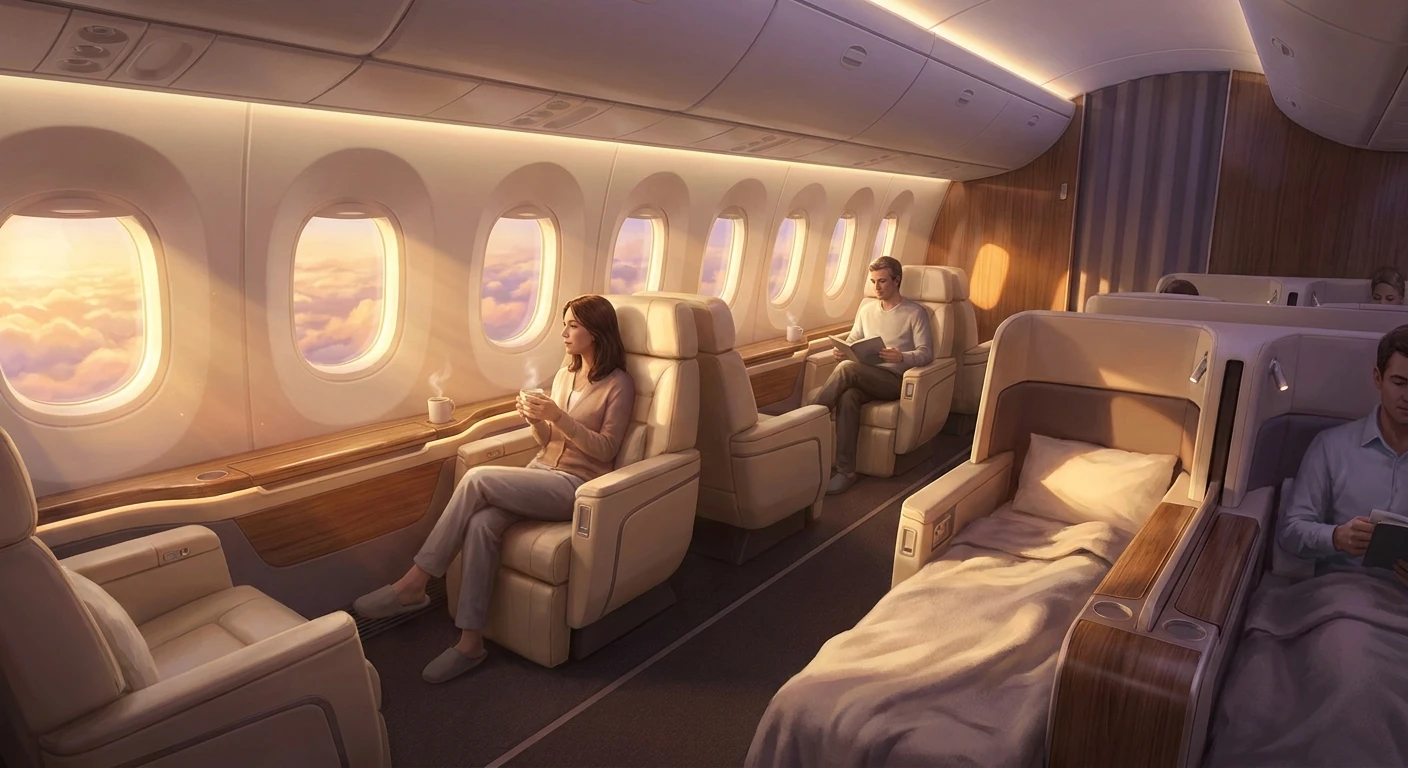
The value proposition of upgrading lies in the tangible, physical benefits provided both on the ground and in the air. Opting for a premium ticket means you bypass many of the bottlenecks associated with standard international travel. The airline has structured this tier to eliminate common friction points, starting from the moment you step into the departure terminal. Passengers gain access to dedicated check-in counters, which instantly cuts down wait times during peak travel hours. Once on board, the dedicated cabin usually contains between 28 and 40 seats, creating an intimate, quieter environment away from the high-traffic zones of the main aircraft fuselage.
Here are the primary advantages you can expect:
- Priority Airport Services: This includes dedicated check-in lanes, priority boarding right after business class, and priority baggage handling to ensure your suitcases are among the first on the carousel.
- Enhanced Cabin Comfort: Wide, custom-designed seats offer significantly more legroom, a wider armrest to prevent elbow clashes, and an integrated leg rest for improved blood circulation during long flights.
- Upgraded Dining Experience: Meals are served on fine china with stainless steel cutlery, accompanied by a curated selection of Australian wines, moving far beyond standard foil-wrapped trays.
To fully understand the gap between the classes, consider the specific hardware and service differences:
| Feature | Standard Economy | Premium Economy |
|---|---|---|
| Seat Pitch & Recline | 31-32 inches / 5-inch recline | 38-40 inches / 9-inch recline |
| Dining Service | Standard tray, plastic utensils | Premium curated menu, real china |
| Baggage Allowance | Standard weight limits (usually 30kg) | Increased limits (often 40kg, route dependent) |
These concrete upgrades demonstrate that the middle tier is a distinct, carefully engineered service designed to mitigate the physical toll of crossing multiple time zones.
Origins of the Intermediate Cabin
The concept of a middle-tier cabin did not exist for most of commercial aviation history. For decades, passengers chose strictly between standard seating and first or business class. The Australian flag carrier officially introduced its premium product in 2008, debuting it alongside their newly delivered Airbus A380 fleet. The initial goal was to capture business travelers working with tighter corporate budgets and leisure travelers willing to pay a moderate premium for extra space on long sectors to London and North America. This launch marked a definitive shift in route planning, acknowledging that 14-hour journeys demand specialized seating architectures.
Evolution of the A380 and Dreamliner Seats
Following the successful A380 integration, the airline embarked on a massive fleet overhaul to standardize this popular cabin. When the Boeing 787-9 Dreamliners were ordered to facilitate non-stop flights between Australia and Europe, the seat underwent a massive redesign. Industrial designer David Caon was brought in to overhaul the physical hardware. The result was a cradle-style seat that cradles the passenger’s body as it reclines, preventing the slipping effect common in older generation seats. This iteration introduced adjustable headrests with built-in pillows and a unique footrest net designed to support the lower legs at an ergonomic angle.
Modern State of Long-Haul Comfort
Today, the product is a mature, highly sought-after fare class integrated across all of the airline’s long-haul fleets, including upgraded A380s and the upcoming Project Sunrise A350-1000s. The modern configuration emphasizes privacy and productivity, incorporating larger entertainment screens, high-power USB-C charging ports, and dedicated cabin crews. The airline now treats this tier as a completely separate entity rather than an economy-plus section, ensuring the soft product—such as welcome drinks and amenity kits—mirrors elements of business class rather than standard economy.
The Ergonomics of Long-Haul Seating
Designing a seat for ultra-long-haul flying requires complex biomechanical engineering. The human body is not meant to remain stationary in a slightly reclined position for up to 17 hours. The latest seat iteration uses a proprietary kinematic mechanism. When the passenger presses the recline button, the seat base shifts forward and tilts upward simultaneously. This cradle motion ensures that the lower back remains supported, maintaining the spine’s natural curvature. The integration of a calf-rest that extends outward, combined with a specialized foot sling, helps distribute leg weight evenly. This reduces pressure on the popliteal artery behind the knee, lowering the risk of deep vein thrombosis (DVT) and minimizing lower limb swelling during flight.
Cabin Atmosphere and Acoustics
Environmental control plays a massive role in passenger fatigue, which is why the interaction between the seat and the specific aircraft type is critical. When flying on the Boeing 787 Dreamliner, passengers benefit from advanced composite fuselage technology.
Here are the scientific facts impacting passenger comfort:
- Cabin Altitude: The Dreamliner maintains a cabin pressure equivalent to 6,000 feet, compared to 8,000 feet in older aluminum aircraft, allowing better oxygen absorption in the blood.
- Humidity Levels: Advanced filtration systems permit higher cabin humidity, significantly reducing dry eyes, skin dehydration, and respiratory irritation.
- Acoustic Treatment: The dedicated cabin features enhanced sound-dampening materials in the bulkheads and engine chevrons that reduce low-frequency drone noise, dropping decibel levels and minimizing auditory fatigue.
- Dynamic Lighting: Chrono-biological LED lighting schemes simulate sunrises and sunsets tailored to the destination time zone, stimulating melatonin production and combating jet lag naturally.
Strategic Guide to Maximizing Your Flight
Maximizing this investment requires strategic planning. Follow this step-by-step guide to ensure you extract every ounce of value from your upgraded ticket.
Step 1: Selecting the Right Aircraft
Always check the equipment type when booking. While both the A380 and the 787 offer excellent seats, the newer Dreamliners feature the latest custom-designed cradle seats and better cabin pressurization for ultra-long-haul routes, making a noticeable difference on sectors exceeding 12 hours.
Step 2: Strategic Seat Selection
Log into your booking immediately to select your seat. Aim for the bulkheads if you want maximum knee clearance, though be aware that entertainment screens in these rows fold into the armrest, slightly reducing the overall seat width compared to standard rows.
Step 3: Navigating Baggage Allowances
Take advantage of the increased baggage limits. Pack a separate small bag for your in-flight essentials, as overhead bin space is usually abundant in the dedicated cabin. Check the exact kilogram allowance for your specific routing to avoid surprises at the check-in counter.
Step 4: Utilizing Priority Boarding
Do not wait until the final call. Use the priority lane to board early. This allows you to settle in, store your bags without stress, and accept the complimentary pre-departure beverage (typically sparkling wine, juice, or water) served by the dedicated flight attendants before the main cabin fills up.
Step 5: Managing the Pre-flight Menu
On select routes, you can use the airline’s app or website to pre-order your main course before checking in. This guarantees your preferred meal choice from the premium menu and streamlines the dining service once you reach cruising altitude.
Step 6: Optimizing Sleep with Amenities
Make full use of the provided amenity kit, which includes a sleep mask, earplugs, and dental care items. Deploy the oversized cotton blanket and the specialized attachment pillow that slides over the headrest to secure your neck, preventing your head from rolling while you sleep.
Step 7: Post-flight Transit and Lounges
Remember that this ticket class does not automatically grant airport lounge access. If you have Oneworld Sapphire or Emerald status, map out your lounge strategy beforehand to secure a shower and hot meal during your transit layover.
Separating Fact from Fiction
Travelers often hold misconceptions about intermediate cabin classes. Clearing these up ensures accurate expectations before arriving at the airport.
Myth: It is just standard seating with a few extra inches of legroom.
Reality: It is a distinct cabin class with entirely different, wider seats, dedicated flight attendants, and upgraded soft products like noise-canceling headphones and premium blankets.
Myth: Booking this ticket automatically gives you airport lounge access.
Reality: Lounge access is not included with the fare. You must hold specific frequent flyer elite status, possess a qualifying credit card, or purchase a separate lounge membership.
Myth: The food is exactly the same as the back of the plane.
Reality: Passengers receive a bespoke menu designed by renowned chefs, served on real crockery with stainless steel cutlery and premium glassware.
Myth: The seats recline completely flat.
Reality: While they offer a generous recline of up to 9 inches and cradle the body ergonomically, they remain seated configurations, not horizontal lie-flat beds.
Frequently Asked Questions
Do you get lounge access with this ticket?
No, lounge entry is only permitted if you hold appropriate Oneworld frequent flyer status or a paid club membership.
What is the exact seat pitch?
Passengers generally enjoy a generous pitch between 38 and 40 inches, depending on the specific aircraft type and row configuration.
Is alcohol complimentary?
Yes, a curated selection of premium Australian wines, beers, and spirits is provided free of charge throughout the duration of the flight.
Can you upgrade using frequent flyer points?
Yes, travelers can request an upgrade from lower classes using points, though success depends heavily on seat availability and your specific loyalty tier status.
Do the seats recline fully flat?
No, the seat features a deep cradle recline optimized for sleeping upright but does not convert into a horizontal bed.
What amenity kits are provided?
Passengers receive sustainable zip pouches containing eyeshades, earplugs, a toothbrush, toothpaste, and custom skincare products tailored for high-altitude hydration.
Are noise-canceling headphones included?
Yes, high-quality, over-ear noise-canceling headphones are provided for use with the high-definition in-flight entertainment system.
Is there a dedicated check-in counter?
Yes, passengers utilize a separate priority lane at the airport to expedite the check-in process and avoid long queues.
Deciding to fly Qantas Premium Economy International is a strategic choice for travelers who value physical comfort, dedicated space, and elevated service on long-haul sectors. By understanding the distinct hardware advantages, superior dining, and ground benefits, you can make a highly informed decision for your next global journey. Secure your upgraded seat today and completely change the way you cross time zones.