

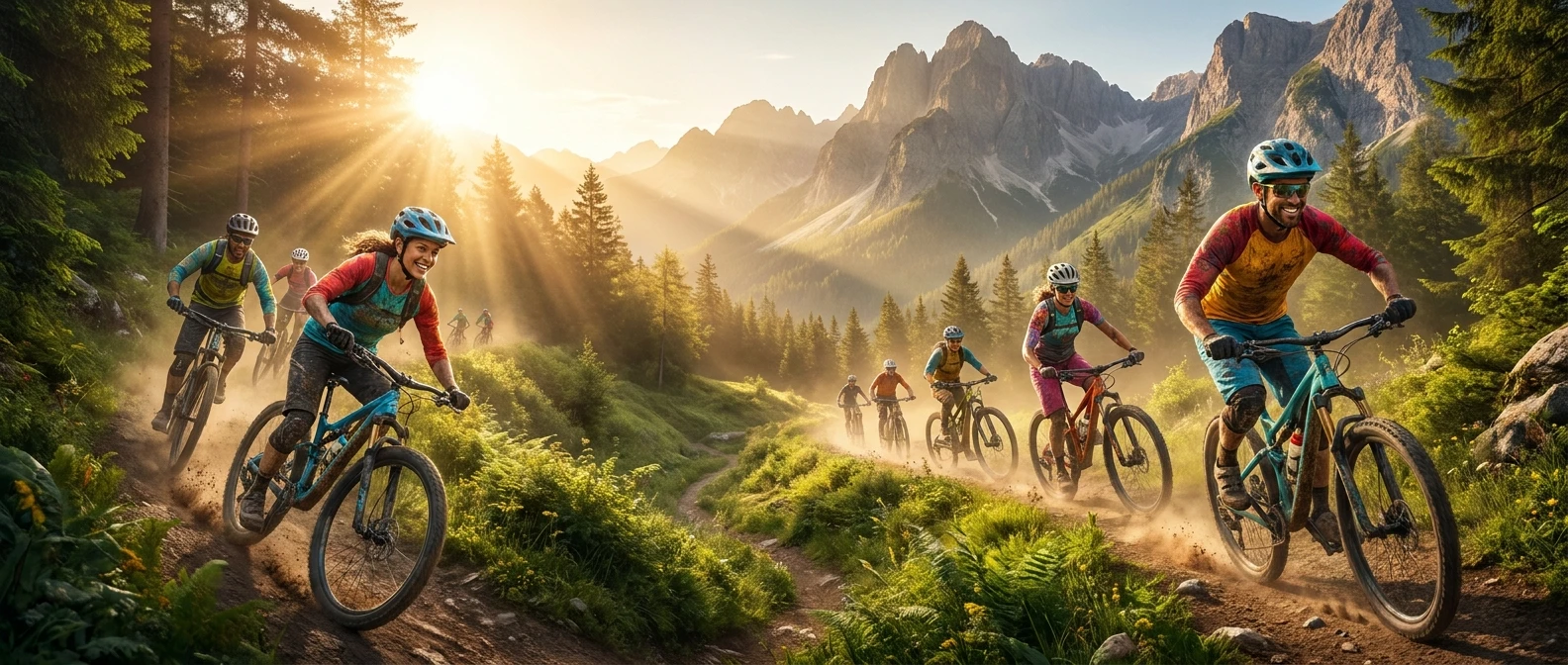
Subaru Trailseeker: The Ultimate Off-Road Adventure
If you are looking for an off-road challenge that pushes your physical and mental limits, the Subaru Trailseeker series stands out as the premier mountain biking and trail running event. Known for its meticulously curated routes and vibrant festival atmosphere, this series captures the essence of endurance sports. Thousands of dirt enthusiasts gather regularly to test their mettle against rugged terrains, steep ascents, and technical singletracks. The series represents more than just a race; it is a sprawling community of outdoor athletes who demand excellence from their equipment and themselves. From fast-paced gravel roads to treacherous rock gardens, the Subaru Trailseeker provides a rigorous testing ground for both novice riders and seasoned professionals. Understanding the mechanics, preparation, and history behind these events gives you a significant tactical advantage on race day. Endurance racing demands respect for the environment, an acute awareness of your physiological thresholds, and a strategic approach to pacing. As outdoor sports continue to capture mainstream attention, flagship events set the benchmark for safety, route marking, and overall participant experience. Expect demanding climbs, exhilarating descents, and a finish line that rewards relentless determination.
Core Mechanics and Racing Benefits
Participating in high-level off-road events requires an understanding of the different formats available to athletes. The series structures its races to accommodate varying levels of fitness, ensuring that both weekend warriors and elite competitors find a suitable challenge. The value proposition of this series lies in its exceptional organization. You get professionally timed races, well-stocked water points, and rapid medical response teams stationed along the route. For example, families can enjoy the beginner-friendly short routes, while professional teams use the marathon distances to secure national rankings. The sheer variety of terrain keeps the racing dynamic, forcing riders to constantly adapt their bike handling skills and energy expenditure.
Read also: Jai Arriw: The Ultimate Framework for Athletic Conditioning; Lachlan Waugh: Athletic Profile and Training Guide.
| Race Format | Approximate Distance | Target Athlete Profile |
|---|---|---|
| Fun Race / Fun Ride | 10km – 20km | Beginners, families, and casual riders focusing on enjoyment rather than speed. |
| Half Marathon | 35km – 40km | Intermediate athletes seeking a solid cardiovascular workout and moderate technical challenges. |
| Marathon | 65km – 70km | Advanced competitors and seasoned professionals requiring high endurance and superior technical skills. |
The physical and psychological rewards of committing to these endurance challenges are substantial. Beyond the obvious cardiovascular improvements, athletes develop a unique set of skills that translate into better overall health.
- Cardiovascular Hypertrophy: Sustained aerobic output during long climbs strengthens the heart muscle, significantly improving oxygen delivery to working tissues over time.
- Neuromuscular Coordination: Navigating unpredictable terrain forces the brain and muscles to communicate rapidly, enhancing balance, reaction time, and spatial awareness.
- Mental Fortitude: Pushing past the dreaded “bonk” or hitting the wall teaches profound psychological resilience, proving that the human body can sustain effort far beyond perceived limits.
- Community Integration: Spending hours in the saddle alongside fellow competitors fosters intense camaraderie, opening doors to training groups and lifelong friendships.
History and Origins of the Dirt Racing Scene
Origins of the Grassroots Movement
The early days of mountain biking and trail running were largely unstructured, characterized by small groups of renegade athletes exploring unmapped fire roads and hiking trails. Before massive corporate sponsorships elevated the sport, local enthusiasts organized underground time trials using rudimentary stopwatches and hand-drawn maps. These pioneers rode rigid frames with cantilever brakes, relying on sheer grit rather than advanced suspension technology. The desire for a formalized, safe, and competitive environment led to the creation of organized regional races. Over time, these local gatherings attracted hundreds of participants, proving the viability of large-scale off-road events.
Evolution of the Series
As the sport gained traction, organizers recognized the need for standardized racing formats. The introduction of chip timing, categorized starting batches, and dedicated route builders changed the landscape entirely. When major automotive and lifestyle brands began sponsoring these events, the production value skyrocketed. The integration of the Subaru Trailseeker branding brought substantial financial backing, allowing for the construction of permanent trail networks, better prize purses for elite athletes, and enhanced festival areas for spectators. This evolution marked the transition from a niche hobby to a highly respected athletic discipline, attracting international talent and significant media coverage.
The Modern State of Trail Racing
Today, off-road racing is a highly sophisticated industry. Modern events operate with military precision, utilizing GPS tracking, drone coverage, and real-time social media updates. The inclusion of e-bike categories and dedicated trail running segments has diversified the participant base, making the events more inclusive. Environmental sustainability has also become a core focus, with organizers enforcing strict anti-littering rules and partnering with conservation groups to rehabilitate trails post-race. The current landscape is a testament to how far the sport has progressed, offering a polished, professional experience while retaining the raw, adventurous spirit of its origins.
Scientific and Technical Deep Dive
Biomechanics of Off-Road Cycling
Riding a bicycle over rough terrain is a complex biomechanical process. Unlike road cycling, where power output is relatively constant, dirt racing requires extreme variations in torque and cadence. Riders must frequently transition between seated pedaling for efficiency and standing attacks to clear obstacles. This dynamic movement relies heavily on the posterior chain, including the glutes, hamstrings, and lower back, which act as natural shock absorbers. Furthermore, maintaining a low center of gravity during descents requires intense isometric contractions in the quadriceps and core. Understanding your individual biomechanics allows you to optimize your bike fit, reducing the risk of overuse injuries such as patellar tendonitis or lumbar strain.
Equipment Engineering for Rough Terrain
The machinery used in modern endurance racing represents the pinnacle of composite engineering and fluid dynamics. Frames are predominantly constructed from high-modulus carbon fiber, laid up in specific directional patterns to provide lateral stiffness for power transfer while allowing vertical compliance for comfort. Suspension forks utilize air springs and complex oil damping circuits to maintain tire contact with the ground, reducing kinetic friction losses. Drivetrains have evolved into wide-range, single-chainring systems that eliminate front derailleurs, reducing weight and mechanical complexity while providing gears low enough to conquer 20-percent gradients.
- Tire Casing and Siping: Modern tubeless tires use reinforced sidewalls to prevent pinch flats, while the rubber compounds are formulated to maximize grip on loose over hardpack surfaces.
- Suspension Kinematics: Linkage designs dictate the leverage ratio of the rear shock, controlling how the bike behaves during small bumps versus massive impacts.
- Aerobic vs Anaerobic Thresholds: Racing requires athletes to operate primarily in Zone 3 and Zone 4 heart rate bands, utilizing glycogen stores efficiently before crossing into lactic acid accumulation.
- Rolling Resistance: Lower tire pressures (often between 18 and 25 psi) allow the tire to deform around trail obstacles rather than bouncing over them, significantly reducing forward energy loss.
Actionable 7-Day Race Preparation Plan
Day 1: Baseline Assessment and Recovery
One week before the event, your physical training should be complete. The focus shifts entirely to tapering and preparation. Use this day for a light, active recovery ride lasting no more than 45 minutes. Assess your body for any lingering stiffness or minor injuries. Hydration protocols must begin now; aim for consistent water intake enhanced with electrolyte tablets to build your cellular fluid reserves. Do not attempt any heavy lifting or intense intervals.
Day 2: Equipment Audit and Servicing
Your machine must be in flawless condition. Inspect the frame for micro-fractures. Measure the chain for wear using a chain checker tool, as a stretched chain will cause poor shifting under load. Bleed the hydraulic brakes if the levers feel spongy, and replace worn brake pads. Ensure your tubeless sealant is topped up, as old sealant dries out and fails to plug punctures. A mechanically sound bike guarantees peace of mind on race day.
Day 3: Technical Skills Practice
Spend an hour refining your bike handling. Set up cones or use a local park to practice tight cornering, track stands, and front-wheel lifts. The goal is to keep your neuromuscular pathways firing without fatiguing the muscular system. Practice clipping in and out of your pedals rapidly. Muscle memory plays a crucial role when you are exhausted and navigating treacherous rock gardens.
Day 4: Nutritional Loading and Mobility
Begin adjusting your macronutrient ratios to favor complex carbohydrates. Brown rice, sweet potatoes, and quinoa should dominate your meals, facilitating glycogen storage in the liver and muscles. Avoid high-fiber or overly spicy foods that could cause gastrointestinal distress. Dedicate at least thirty minutes to deep tissue stretching, focusing heavily on the hip flexors, IT bands, and calves.
Day 5: High-Intensity Taper Activation
To prevent the legs from feeling sluggish on race morning, perform a short activation session. Ride for 30 minutes, incorporating three to four short sprints lasting roughly 15 seconds each. These brief bursts of high-intensity effort wake up the central nervous system and keep the fast-twitch muscle fibers primed. Spin out the legs immediately afterward and consume a recovery shake containing a 3:1 ratio of carbohydrates to protein.
Day 6: Final Organization and Rest
Lay out all your racing gear, including your helmet, shoes, sunglasses, gloves, and race apparel. Pin your race number to your jersey. Prepare your hydration pack or water bottles, mixing your carbohydrate solutions in advance. Pack spare tubes, CO2 canisters, and a multi-tool. Rest completely today. Stay off your feet, avoid prolonged sun exposure, and aim for at least nine hours of high-quality sleep.
Day 7: Race Day Execution
Wake up exactly three hours before your start time. Consume a familiar, easily digestible breakfast like oatmeal with a banana. Arrive at the venue early to navigate parking, registration, and warm-ups without stress. Seed yourself correctly in your starting batch. Once the gun goes off, stick strictly to your pacing strategy. Do not get caught up in the early adrenaline rush; ride your own race, hydrate every fifteen minutes, and trust your preparation.
Myths and Reality of Off-Road Endurance Racing
Myth: You need a ten-thousand-dollar carbon fiber bicycle to be competitive or enjoy the event.
Reality: While high-end bikes offer marginal gains in weight and shifting precision, modern budget-friendly aluminum bikes with functional geometry are incredibly capable. Rider fitness and technical skill matter significantly more than the price tag of the equipment.
Myth: Trail racing is an exclusive club only welcoming to elite, sponsored professionals.
Reality: The vast majority of participants are amateur enthusiasts, weekend warriors, and families. Organizers design events specifically to foster an inclusive, welcoming atmosphere regardless of athletic background.
Myth: Mountain biking is inherently too dangerous for average athletes to try.
Reality: While risks exist in any outdoor sport, sanctioned events feature clearly marked routes, A and B lines (easy and hard options) for technical features, and strict safety protocols. Riding within your limits minimizes danger.
Myth: You must train for twenty hours a week to survive a marathon distance.
Reality: Structured, high-quality training plans requiring only six to eight hours a week can successfully prepare an amateur athlete for long-distance events by focusing on consistency rather than pure volume.
Frequently Asked Questions
What is the minimum age to enter the series?
Age restrictions vary strictly by race distance. Short fun rides often allow children as young as eight to participate with adult supervision, whereas the demanding marathon distances typically require participants to be at least nineteen years old to ensure physical readiness.
Are e-bikes allowed on the route?
Yes, pedal-assist e-bikes are increasingly welcomed at these events. However, they are strictly categorized into their own starting batches and result categories to ensure fair competition among traditional unassisted riders.
Do I need a formal racing license to participate?
Most large series require a temporary day license for insurance and regulatory purposes if you do not hold an annual membership with the national cycling federation. This fee is usually nominal and handled during online registration.
What happens if it rains heavily on race day?
Events operate rain or shine. In cases of extreme weather involving lightning or flooding, organizers may delay the start, shorten the route, or, in very rare circumstances, postpone the event for safety reasons.
Are there water points along the route?
Absolutely. Professional events feature strategically placed water points stocked with hydration drinks, water, energy gels, and solid foods like bananas and potatoes to keep athletes fueled throughout the challenge.
Can spectators follow the race?
Spectators are encouraged in the festival area and at designated spectator points along the route. However, driving personal vehicles on the actual race track is strictly forbidden to protect the athletes.
How do I track my finishing time?
Every rider receives a race board equipped with an electronic timing chip. As you cross the starting and finishing mats, your time is automatically recorded and immediately uploaded to a live results database accessible via smartphones.
Committing to an endurance challenge is a remarkable display of discipline and passion. The dirt, the sweat, and the mechanical precision all culminate in an experience that tests your true character. Register for your next adventure today, prepare your gear meticulously, and conquer the trails with confidence.