
Why the abc top 100 books list matters more than ever in 2026
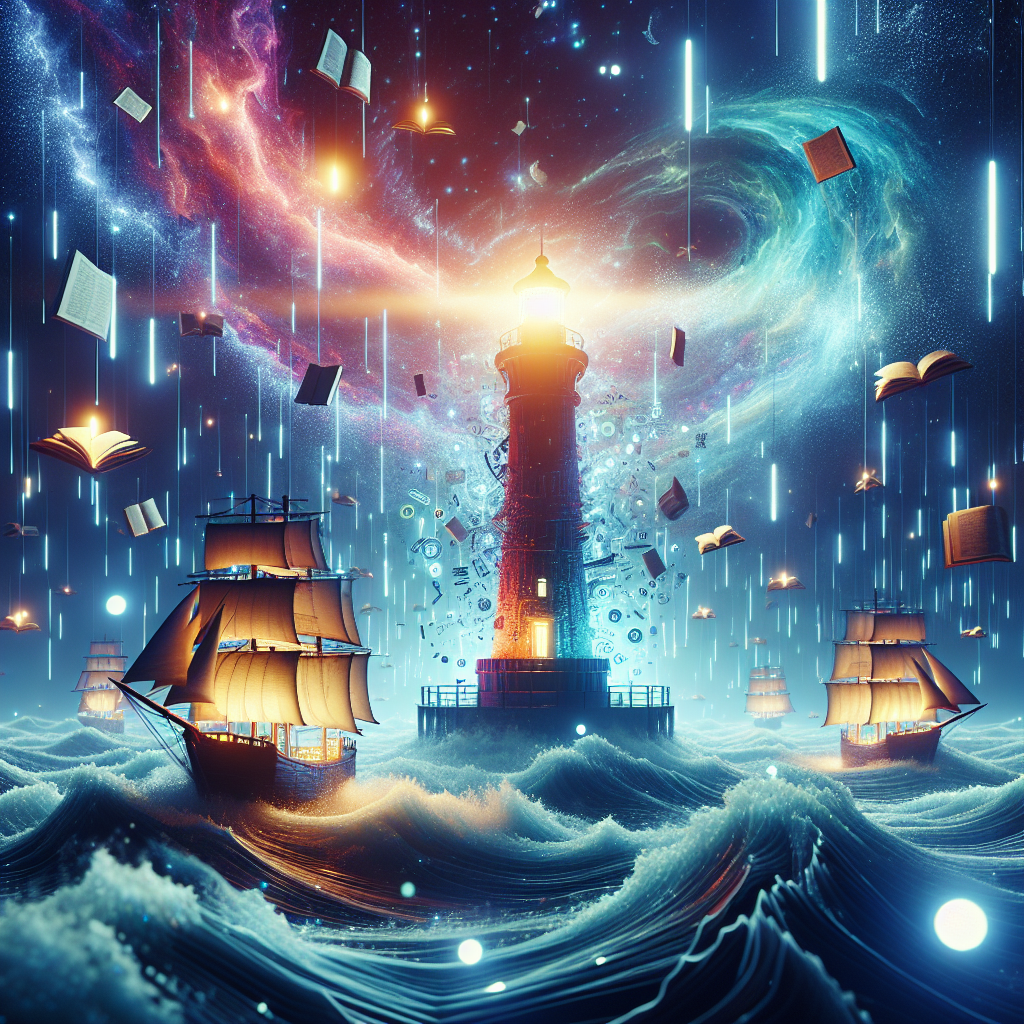
Have you ever glanced at the abc top 100 books list and felt a strange mix of sheer excitement and absolute dread? You’re definitely not alone. Figuring out where to even begin with such a massive literary mountain is intimidating. The abc top 100 books ranking isn’t just a random assortment of titles; it’s a carefully curated roadmap to some of the greatest ideas ever put on paper. I remember sitting in my slightly chilly apartment in Kyiv a couple of years back, right in the middle of the rolling winter blackouts. I had nothing but a battery-powered reading lamp, an old e-reader, and a lot of quiet hours. That was the exact moment I decided to stop endlessly scrolling social media and actually tackle this legendary list. It completely rewired my brain and changed how I process information.
Right now, as we navigate through 2026, our attention spans are constantly under attack by algorithmic feeds and rapid-fire video content. Taking a step back to engage with long-form literature feels almost like a rebellious act. But it’s an act that pays off massively. When you commit to exploring these specific titles, you aren’t just reading stories; you are downloading centuries of human experience, empathy, and raw wisdom directly into your mind. My goal today is to show you exactly how to approach this journey without feeling overwhelmed, providing you with a rock-solid plan to make these books a natural part of your daily routine.
Let’s get straight to the point. Why should anyone care about this specific collection? The real magic lies in the sheer diversity and the rigorous selection criteria used to build it. It completely removes the decision fatigue from your reading life. Instead of wandering aimlessly through bookstore aisles or scrolling endless digital storefronts, you have a definitive map of guaranteed quality.
| Ranking Tier | Primary Focus & Genre | Estimated Reading Commitment |
|---|---|---|
| Top 1 – 25 | Absolute Classics & Philosophical Giants | 15 – 25 hours per book |
| Top 26 – 75 | Modern Masterpieces & Cultural Milestones | 10 – 15 hours per book |
| Top 76 – 100 | Hidden Gems, Sci-Fi, & Revolutionary Ideas | 8 – 12 hours per book |
The core value proposition here is massive, and I want to give you two very specific examples. First, imagine grabbing a heavy philosophical novel from the top ten. It forces you to slow down, literally changing the pacing of your internal monologue and teaching you patience. Second, picking a sharp, modern sci-fi gem from the bottom fifty expands your imagination beyond standard tropes, making you question the ethical boundaries of our current technology-driven society. It’s a mental workout that passive entertainment simply cannot provide.
Here are three undeniable reasons why dedicating your time to these works is a total game-changer:
- Instant Quality Control: Every single title has been vetted by thousands of readers and critics. You never have to worry if the payoff is worth the time investment.
- Cultural Literacy: These are the stories that shape our movies, our politics, and our casual conversations. Knowing them gives you an incredible edge in understanding global cultural references.
- Enhanced Empathy: Stepping into the shoes of incredibly diverse characters from different eras builds an emotional intelligence that directly translates into your real-world relationships.
The Origins of Literary Rankings
People love lists. We always have. The desire to rank and categorize human achievement goes back centuries, but the formalized concept of a definitive reading list really gained traction in the early 20th century. Libraries and academic institutions wanted a standardized way to ensure students and citizens were engaging with foundational texts. Originally, these lists were highly localized, reflecting only the immediate cultural bubble of the people writing them. You had rigid, gatekept catalogs that barely scratched the surface of global literature. But as global communication expanded, so did our understanding of what makes a story universally impactful.
Evolution of the Selection Process
Fast forward a few decades, and the internet completely shattered the old ways of ranking literature. The selection process morphed from a few academics sitting in a dusty room into a massive, crowdsourced phenomenon. People started combining critical acclaim with raw reader data, sales metrics, and cultural longevity. The ranking didn’t just look at what was ‘important’—it started looking at what actually resonated with normal people. This hybrid approach of blending expert critique with grassroots popularity is exactly what gave birth to the incredibly balanced lists we rely on today, making sure the books are both intellectually stimulating and genuinely enjoyable to read.
The Modern State of the List in 2026
Now that we are deep into 2026, the ranking has reached an entirely new level of sophistication. We aren’t just looking at static popularity anymore. Modern analytics, combined with massive online book club communities, ensure that the list stays incredibly relevant. We’ve seen a brilliant integration of diverse voices, indigenous stories, and translated works that were historically overlooked. The 2026 landscape of this list represents a truly global human experience. It is a living, breathing document that pushes back against the noise of AI-generated fast-content, standing as a testament to authentic, brilliant human creativity. The curation is tighter, the genres are broader, and the impact is more profound than ever before.
The Cognitive Science of Deep Reading
Let’s get a bit nerdy for a second because the science behind what happens to your brain when you tackle these heavy hitters is absolutely fascinating. Deep reading—the kind required to get through complex literature—is fundamentally different from the skimming we do on screens all day. When you engage with a challenging text, your brain engages in a process that researchers call ‘cognitive patience.’ You are actively holding multiple narrative threads, character arcs, and thematic elements in your working memory simultaneously. This heavy lifting strengthens the neural pathways responsible for sustained focus and critical analysis, acting quite literally like resistance training for your prefrontal cortex.
Neurological Rewiring Through Classic Literature
What’s even wilder is how these books affect our emotional circuitry. Neurologists frequently discuss neuroplasticity, which is the brain’s ability to reorganize itself by forming new neural connections. Reading deeply actually encourages this plastic growth. Furthermore, we develop something called Theory of Mind—the cognitive ability to attribute mental states, beliefs, and intents to others. When you immerse yourself in the psychological depths of a well-written character, your brain simulates their experiences as if they were your own.
Here are some hard scientific facts about what happens when you commit to reading high-level literature:
- Stress Reduction: Studies show that just six minutes of deep reading can reduce stress levels by up to 68%, outpacing listening to music or taking a walk.
- Vocabulary Expansion: Exposure to complex sentence structures organically boosts both your active and passive vocabulary, improving verbal fluency.
- Delaying Cognitive Decline: Engaging in mentally stimulating activities like reading complex narratives significantly builds cognitive reserve, protecting against age-related decline.
- Enhanced Connectivity: Functional MRI scans reveal heightened connectivity in the left temporal cortex (associated with language comprehension) for days after reading a compelling novel.
- Improved Sleep Quality: Swapping blue-light emitting screens for a physical book before bed drastically improves melatonin production and sleep architecture.
Day 1: Auditing Your Reading Habits
If you want to genuinely succeed, you need a realistic starting point. Day one is all about complete honesty. Look at your screen time stats on your phone. How many hours are you losing to doomscrolling? Identify those dead zones in your day—your commute, your lunch break, those twenty minutes before sleep. You don’t need to magically find three free hours; you just need to reclaim the lost minutes. Write down exactly when and where you currently read, even if the answer is ‘nowhere’. This audit gives you the baseline data you need to build a sustainable habit without turning your entire life upside down.
Day 2: Selecting Your First Three Targets
Do not look at the whole 100-book list and try to plan it all out. You will freeze. Instead, pick exactly three books. Choose one that is universally considered an easy, gripping read (maybe a modern thriller or concise sci-fi). Choose one classic that you’ve always felt guilty about not reading. And choose one total wild card—something from a genre or culture you usually ignore. Having a micro-queue of just three books removes the pressure while keeping your options varied enough to match whatever mood you’re in.
Day 3: Creating a Distraction-Free Environment
You cannot read a masterpiece with your phone buzzing every two minutes. On day three, build your sanctuary. It doesn’t have to be a fancy library; a specific corner of your couch works perfectly. The rule is simple: when you are in this spot, your phone goes into another room, or at the very least, into ‘Do Not Disturb’ mode. Keep a physical dictionary or a notebook nearby if you want to look up words later, but completely eliminate the temptation to switch tabs or check notifications. Your brain needs an unbroken environment to sink into deep reading.
Day 4: The 20-Page Micro-Habit
Forget setting goals like ‘I will read a book a week.’ That’s a recipe for failure. On day four, implement the 20-page micro-habit. Commit to reading just 20 pages a day, no matter what. It sounds tiny, right? That’s the point. It is so small that your brain can’t make excuses not to do it. But here is the math: 20 pages a day is roughly 7,300 pages a year. That is easily 20 to 25 full-length books annually, just from a tiny, unbreakable daily commitment. Momentum is everything.
Day 5: Active Marginalia and Note-Taking
Passive reading makes books forgettable. Active reading makes them a part of your identity. Start writing in your books (or using the highlight and note features aggressively on your e-reader). Underline beautiful sentences. Put question marks next to things that confuse you. Argue with the author in the margins. When you treat reading as a dialogue rather than a monologue, your retention skyrockets. You are no longer just consuming content; you are actively wrestling with ideas.
Day 6: Joining the Digital Discourse
Reading is solitary, but understanding is communal. In 2026, the digital infrastructure for book lovers is incredible. On day six, find an online community, a local book club, or even a dedicated forum discussing your current read. Sharing your thoughts, reading differing interpretations, and debating character motives adds a massive layer of enjoyment. It holds you accountable and often reveals themes or historical contexts that you completely missed on your own.
Day 7: Review and Reward
By the end of the week, you should have a solid foundation. Take day seven to look back at what you’ve accomplished. Did you stick to the 20 pages? Did you enjoy the book you picked? If a book is absolutely draining your soul, drop it. Yes, give yourself permission to quit a book that isn’t working for you, even if it’s considered a masterpiece. Reward yourself for building the habit—buy a nice bookmark, grab a premium coffee for your next reading session, and celebrate the fact that you’ve taken control of your attention span.
Myth 1: You must read the list in exact numerical order.
Reality: That is terrible advice and a fast track to burnout. The ranking is a measure of consensus, not a chronological curriculum. Jump around based on your mood, the season, or your current life circumstances. Variety keeps the project alive.
Myth 2: Listening to audiobooks doesn’t actually count.
Reality: Science vehemently disagrees. Studies show that the cognitive and emotional processing of a narrative is almost identical whether you consume it via text or audio. If a beautifully narrated audiobook helps you get through a massive 800-page classic during your commute, take the win.
Myth 3: If you start a book on the list, you are obligated to finish it.
Reality: Life is way too short to suffer through a book that you genuinely hate. Not every masterpiece will resonate with your specific personality or current phase of life. Give it 50 pages; if you are still miserable, put it down and pick up the next one.
What is the absolute best book to start with?
There is no single universal answer, but generally, starting with a shorter, narrative-driven novel from the mid-tier of the ranking builds confidence. Look for a classic under 300 pages with a fast-moving plot.
How often is the list updated?
While the foundational classics rarely shift, the modern entries and the exact ordering are typically re-evaluated every few years. In 2026, minor algorithmic adjustments happen annually based on global reading trends and critical reassessments.
Are there modern novels on the list?
Absolutely. It is not just dead authors from the 1800s. You will find groundbreaking science fiction, sharp contemporary literary fiction, and revolutionary voices from the last decade holding their own against the ancient epics.
Do I need an e-reader or physical copies?
Use whatever removes friction from your life. Physical books offer a tactile, distraction-free experience, while e-readers are incredible for reading in the dark, traveling light, and instantly looking up definitions of obscure words.
How long does it realistically take to read all 100?
If you average about two to three books a month, you are looking at roughly three to four years. It is not a sprint; it’s a marathon. Treat it as a multi-year background project rather than a strict deadline.
Can kids or teenagers read these books?
Many titles on the list are perfect for younger readers and young adults, but others contain highly mature, complex themes. It’s best to check individual content warnings and age recommendations for specific titles.
Are non-fiction books included?
Yes. While fiction heavily dominates, you will definitely encounter memoirs, historical accounts, philosophical essays, and groundbreaking scientific texts that have fundamentally altered human thought.
Listen, taking on the abc top 100 books list is one of the most rewarding intellectual adventures you can embark on in 2026. You don’t have to be a literary snob or a speed reader to conquer it. You just need a bit of strategy, a dash of curiosity, and the willingness to trade a few minutes of endless scrolling for a few pages of profound storytelling. Grab that first book today, set your phone aside, and start building a library in your mind. The stories are waiting for you—what are you going to read first?