

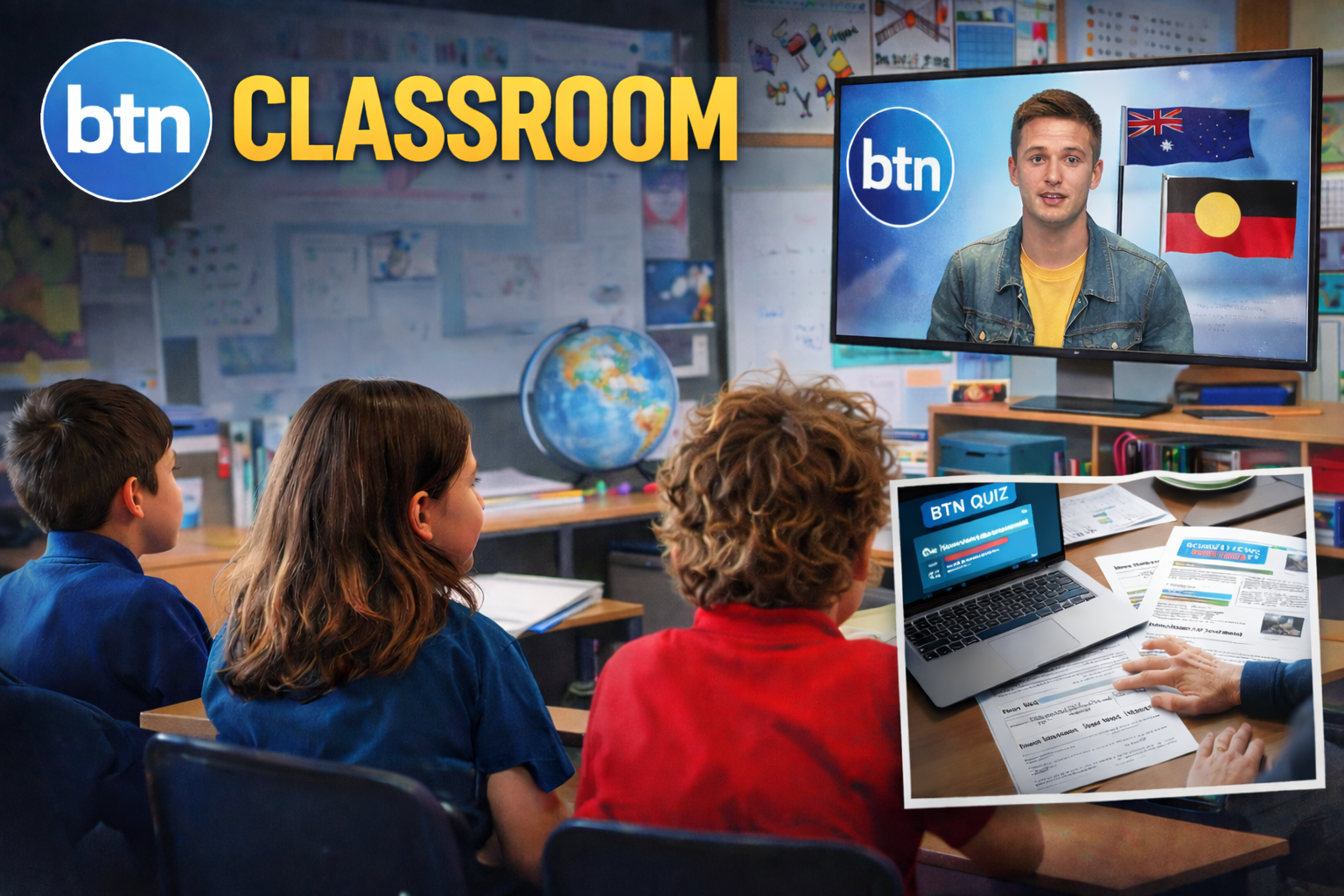
Ask a lot of Australian teachers what they put on when they want a class to wake up, think hard and actually talk, and one name still comes up fast: BTN Classroom. Not because it’s trendy. Not because it’s loud for the sake of it. And not because schools are short on content. There’s heaps of content. That’s part of the problem, really.
And honestly, there’s something reassuring about that. In a school day packed with bells, logins, rushed transitions and “hang on, the Wi-Fi’s gone again,” a resource that works cleanly and feels familiar is gold. Teachers don’t say that in glossy brochure language, but they feel it. So do students.
This is where the story gets interesting. BTN Classroom is not just a TV segment or a neat little education add-on. It has grown into a broader classroom tool that helps with news literacy, discussion, vocabulary, confidence and that often-forgotten skill of simply paying attention to the world around you. That last bit matters more than ever.
So what is BTN Classroom, really?
At its core, BTN Classroom is the school-facing part of Behind the News, the ABC’s long-running educational news service for young Australians. It is built for students, but it’s also shaped with teachers in mind. That matters. Plenty of educational media is “for schools” in theory, then drops into a class like a brick. BTN usually doesn’t. It arrives ready to be used.
The format is simple enough on paper. There are regular episodes during the school term, short reports on current issues, transcripts, quizzes and classroom resource packages. But the value is not just the list of pieces. It’s how the pieces work together. A teacher can run the full episode, pull out one segment, set a quick quiz, grab a transcript, pause for discussion, then move into a writing task or debate without having to build the whole lesson from scratch. That saves time, yes. But it also keeps momentum going. And once a class has momentum, you don’t want to lose it.
There’s also the wider BTN ecosystem around it. BTN High is aimed more directly at Years 7 to 12. BTN Newsbreak gives schools a shorter daily-style update. BTN Live adds a Q&A element. Then there’s the archive, which teachers quietly love because it means a good segment doesn’t vanish after one week. It can be pulled back months later when a topic fits the timetable again.
That’s the practical picture. But the bigger point is this: BTN Classroom helps schools bring real-world issues into the room in a way that feels organised, safe enough to manage, and lively enough to keep students with you.
| BTN feature | What it does | Why teachers care |
|---|---|---|
| BTN Classroom | Weekly episode built around current issues and events | Easy entry point for discussion, literacy and general knowledge |
| Teacher resource packages | Discussion prompts, activities and transcript support | Saves prep time and keeps lessons structured |
| Quizzes | Short checks tied to recent episodes | Good for recall, review and quick engagement |
| BTN High | Stories tailored more directly to Years 7–12 | Useful when older students need a sharper level of detail |
| BTN Live | Live Q&A format linked to the weekly cycle | Builds curiosity and gives students a sense that questions matter |
| Archive | Past transcripts, activities and resources kept in one place | Makes reuse possible across different units and year levels |
Why it clicks with Aussie classrooms
Here’s the thing. A lot of school resources are technically good and still fall flat. They’re worthy. They’re polished. They tick boxes. But the room goes quiet in the wrong way. Students stare. Teachers push through. Everyone knows the energy has left the building.
BTN often avoids that because it understands pace. The reports are short. The scripting is direct. The presenters sound like real people, not textbooks in sneakers. And the topics are chosen with that school-age question in mind: why should I care? If a resource can’t answer that quickly, it’s in trouble.
Australian classrooms also have a certain rhythm. There’s the practical, no-fuss side of teaching here. Teachers want a resource they can trust without needing an hour of rescue work around it. Students want something that feels current but not chaotic. BTN sits nicely in that gap. It gives just enough context to make a story make sense, but not so much that the report buckles under its own weight.
And yes, there’s another piece. It feels local. Even when BTN covers international topics, it often frames them through Australian students, Australian communities or the way an issue lands here. That matters more than people admit. Context is everything. A news story that floats in with no local angle can feel distant fast. BTN tends to anchor it.
- It speaks in a way students can actually follow.
- It gives teachers ready-made structure without feeling rigid.
- It connects school learning with life outside the classroom.
That sounds simple. It isn’t. Those three things are what many education tools chase and never quite catch.
More than “kid news”
Some adults still talk about BTN as if it’s just a softened version of the regular news. That misses the point a bit. It’s not just news, shrunk down. It’s a teaching tool built around explanation, framing and follow-up. That’s a different job.
Take media literacy. Schools talk about it a lot now, and fair enough. Students are growing up with headlines, clips, comments, reaction videos and half-true posts flying at them all day. They need more than content. They need habits. How do you identify the main point? What counts as a reliable source? How do tone and framing shape the way a story feels? What has been left out? That’s where BTN can really help.
A short report can do more than tell students what happened. It can open the door to how stories are made, how facts are checked and why different voices matter. That’s not some fancy side lesson. That’s basic survival for life online now.
And there’s a gentle confidence-building piece here too. Students who don’t usually speak up in class are often more willing to comment after a BTN segment because everyone has seen the same thing. The room has shared ground. No one is guessing what the topic is. No one is trying to decode a page of stiff text alone. The discussion starts from a common point, and that helps.
It also helps students who are strong orally but less confident with formal writing. A teacher can begin with a clip, move into verbal responses, then shift that thinking into a paragraph, a reflection or an argument piece. That’s good teaching design, but it’s also human. Start where kids are. Then build.
The weekly routine teachers quietly rely on
One of BTN Classroom’s best features is not glamorous at all. It’s rhythm. The regular weekly cycle matters. Schools run on routine. So do kids, even the ones who insist they hate it.
When a class knows there’s a familiar current-affairs block each week, the whole thing gets easier. Teachers don’t have to sell the format from scratch every time. Students know the drill: watch, listen, react, discuss, maybe quiz, maybe write, maybe argue a point and change your mind halfway through. That predictability is underrated.
For some classes, BTN becomes the bridge into the week’s writing work. For others, it’s the Friday decompression task that still feels academic without being punishing. In upper primary, it can work as a whole-class conversation starter. In lower secondary, it often becomes a springboard into civics, English, humanities, health, digital literacy or pastoral conversations that didn’t quite fit elsewhere but still needed room.
And because the resource packages and transcript support are sitting there, teachers can adjust the depth. Busy week? Keep it short. Need an assessed response? Stretch it out. Want to revisit vocabulary? The transcript makes that easier. Need a simple homework prompt? The quiz can do some of that heavy lifting.
- Watch one segment and stop for quick discussion.
- Run the quiz as a warm-up or exit ticket.
- Use the transcript to support writing, close reading or vocabulary work.
That’s not flashy. But in schools, useful beats flashy most days.
There’s a reason teachers preview it first
Now for the nuance. BTN is built for young people, but it does not pretend the world is soft. Some topics are heavy. Some are upsetting. Some need care. The ABC itself notes that some stories may not suit younger children and suggests teachers preview stories before class. That’s not a warning sign so much as a reminder that judgment still matters.
And thank goodness for that, honestly. No serious classroom resource should ask teachers to switch their brains off. Good teaching is still about knowing your group. A Year 5 class after lunch on a stormy Thursday is not the same as a settled Year 8 class with strong discussion norms. Same resource. Different landing.
That preview step is part of why BTN works well in schools. It doesn’t replace teacher choice. It supports it. The teacher decides whether to show the full episode, one report, or none of it. That sounds obvious, but it’s a healthy model. Students get access to real issues, but through a classroom filter that considers age, maturity and emotional tone.
There’s a broader lesson in that too. Media literacy is not only about spotting false information. It is also about judgment, context and fit. What belongs in this room, with these students, at this moment? That’s media literacy in practice, right there.
Where BTN Classroom fits across year levels
People sometimes ask whether BTN is mainly for primary or mainly for secondary. The honest answer is: it depends on the teacher, the class and the segment. BTN’s wider setup gives schools room to scale. That’s one reason it has lasted.
Upper primary teachers often use BTN Classroom to build background knowledge, vocabulary and speaking confidence. It’s a neat way to help students move from “I kind of heard about that” to “I can explain the basics.” That shift is huge. It helps in reading. It helps in writing. It helps in confidence.
Secondary teachers, especially in Years 7 to 9, may lean more on BTN High or use BTN Classroom selectively. Older students often need more detail, more challenge or a sharper analytical angle. But that does not make BTN too basic. It just means the teacher may use the clip as the entry point rather than the whole lesson. And that’s fine. Not every tool has to do every job alone.
| Year level | Typical BTN use | What students tend to gain |
|---|---|---|
| Upper primary | Whole-class viewing, short discussion, vocabulary and summary tasks | Confidence, general knowledge, listening and speaking skills |
| Years 7–8 | Selected reports, quiz checks, short analytical writing | Topic awareness, explanation skills, stronger discussion habits |
| Years 9–10 | BTN High clips, comparison tasks, source and framing analysis | Media literacy, critical thinking and argument structure |
| Mixed-ability groups | Shared viewing with differentiated follow-up tasks | Common starting point with flexible depth |
| Support settings | Transcript-backed viewing and guided comprehension | Accessible entry into current issues without overload |
Why students respond to it
Students don’t all love the same school content. We know that. Some love facts. Some love stories. Some only perk up when there’s a debate brewing. BTN manages to catch a few of those groups at once, which is not bad going.
Part of that comes down to variety. One week there might be a topic linked to technology or sport. Another week it might be history, health, science, community life or online safety. That variety helps students find an entry point. Not every report will land with every child, but usually something in the mix does.
There’s also a social piece. Kids like knowing what other kids are talking about. They like having some grip on the wider conversation. BTN can give them that without forcing them to swim through adult media spaces that are faster, harsher and often badly framed for young audiences.
And sometimes, let’s be real, students just like having an informed opinion. They enjoy saying, “Actually, I saw something about that.” That moment matters. It turns passive consumption into participation.
- Students can build opinion without feeling lost.
- They get practice hearing different views.
- They learn that asking a sharp question is part of learning, not a sign they missed the point.
The quiet role it plays in school culture
Here’s a part people don’t mention enough. Resources like BTN Classroom don’t only support lessons. They shape school culture in small, steady ways. They tell students that being informed matters. They normalise discussion. They make curiosity feel like school business, not some extra hobby for “the academic kids.”
That has value. Maybe even more than we admit.
When students regularly see issues explained clearly and discussed respectfully, they pick up habits. Listen first. Ask what happened. Ask who is affected. Ask what evidence is there. Ask whether a story sounds too neat. Those are classroom habits, yes. But they are also social habits. They travel.
And because BTN often presents more than one point of view, it nudges students away from that online reflex where every issue gets flattened into a team sport in ten seconds. Real life is usually messier. School should leave room for that messiness. Not chaos, just honest complexity. Or, to put it more simply, enough room for students to say, “I thought one thing at first, but now I’m not so sure.” That’s good learning.
Is it perfect? Not quite, and that’s fine
No classroom resource does everything. BTN Classroom is strong, but it’s not magic. Some reports will suit one class and miss another. Some topics will need more depth than a short segment can provide. Some students will want more challenge. Others will still need more scaffolding.
But that’s not a weakness so much as the normal limit of any shared classroom tool. The point is not that BTN replaces the teacher, the textbook or deeper inquiry work. The point is that it starts things well. It gives teachers a reliable launch pad. And a good launch pad is worth plenty.
It also helps that the wider ABC Education environment frames the material as free and curriculum-linked. Schools are always balancing budgets, time, access and practical constraints. A trusted public resource that fits those pressures has a real advantage. Not in a flashy, “wow” sort of way. In a Monday-morning way. The kind that actually matters.
FAQ
What age group is BTN Classroom mainly for?
It is generally aimed at upper primary and early secondary students, with BTN broadly described for 10 to 13-year-olds and a wider upper primary to secondary audience.
Is BTN Classroom free for schools?
Yes. ABC Education describes its resources as free, which is a big plus for schools trying to keep quality up without adding cost.
Does BTN Classroom only cover hard news?
No. It covers a mix of current issues, social topics, science, history, health, technology and student-facing stories, so it usually feels broader than just headline news.
Can teachers use it without showing a full episode?
Yes. Many teachers use one segment, a quiz, a transcript or a discussion task rather than running the entire episode.
What is the difference between BTN Classroom and BTN High?
BTN High is more directly tailored to students in Years 7 to 12, while BTN Classroom often works well as the broader school-facing weekly resource.
Why do teachers preview BTN stories first?
Because some stories may not suit every age group or every class on a given day, so teacher judgment still matters a lot.
Why has BTN lasted so long in Australia?
Because it mixes clarity, local relevance, classroom-ready support and a tone that students can actually handle without switching off.
Conclusion
BTN Classroom has lasted because it understands something simple but important: students do not need the world hidden from them, but they do need help making sense of it. That’s the sweet spot. Not panic. Not overload. Not baby talk. Just clear explanation, room to think, and a classroom structure that supports the teacher instead of getting in the way.
For Australian schools, that still counts for a lot. The resource is familiar, yes, but it is not stale. It keeps pace with school life because it respects the real conditions of school life: limited time, mixed confidence, different reading levels, the need for trust, and the reality that discussion often starts better when everyone has seen the same thing.
So no, BTN Classroom is not just a kids’ news show with worksheets attached. It’s a steady part of how many schools help students build general knowledge, media sense and that very human skill of talking about the world without getting lost in it. And that, honestly, is a pretty solid reason it still matters.