
How to Find the Ultimate Cheese Cake Shop Near Me
Typing cheese cake shop near me into your search engine is usually the first step in solving a very specific, undeniable craving. Finding a genuinely exceptional local bakery often feels like searching for a hidden culinary treasure. The perfect slice requires a delicate balance of rich dairy, structurally sound crust, and the right degree of sweetness. It is not just about grabbing the nearest available dessert; it is about locating a purveyor of artisanal quality who understands the complex geometry and chemistry of high-end baking.
Cheesecakes are a globally celebrated phenomenon, offering an incredible variety of textures and flavor profiles. From the dense, towering heights of a classic New York style to the heavily caramelized, crustless exterior of a Basque burnt variation, the options are vastly different. Identifying a high-quality local establishment requires an understanding of premium ingredients, proper preparation methods, and the distinct hallmarks of artisan craft. The pursuit of premium pastries is a serious endeavor, and arming yourself with the right knowledge ensures that every bite you take is worth the investment.
Read also: Perfect Apricot Chicken Drumsticks Recipe; Inside Oaks Neutral Bay: An Iconic Sydney Experience.
The Anatomy of Artisan Baking: What Makes a Bakery Exceptional
A superior dessert destination separates itself from mass-market commercial bakeries through a commitment to foundational techniques and superior ingredients. When you evaluate a shop, you are looking for evidence of scratch-baking. Commercial operations often rely on pre-packaged mixes, artificial flavorings, and chemical stabilizers to extend shelf life. In contrast, an artisanal establishment focuses on the raw integrity of cream cheese, mascarpone, ricotta, fresh eggs, and real butter.
There is a massive value proposition in choosing independent, specialized bakeries over generic grocery store aisles. First, supporting local craftspeople keeps the economic engine of your immediate community running. Second, you are virtually guaranteed a fresher product that has not been sitting in deep freeze for months. For example, a dedicated local shop will use real Madagascar vanilla beans—where you can actually see the tiny black specks in the filling—rather than synthetic vanilla extract. Another clear example of superior quality is the use of house-made, seasonal fruit compotes rather than overly sweet, gelatinous canned pie fillings that mask the natural flavor of the cheese.
To truly judge a local bakery’s offerings, keep these critical evaluation criteria in mind:
- Assess the crust integrity: A high-quality base should be firm, buttery, and hold its shape when sliced, never soggy or crumbly to the point of disintegration.
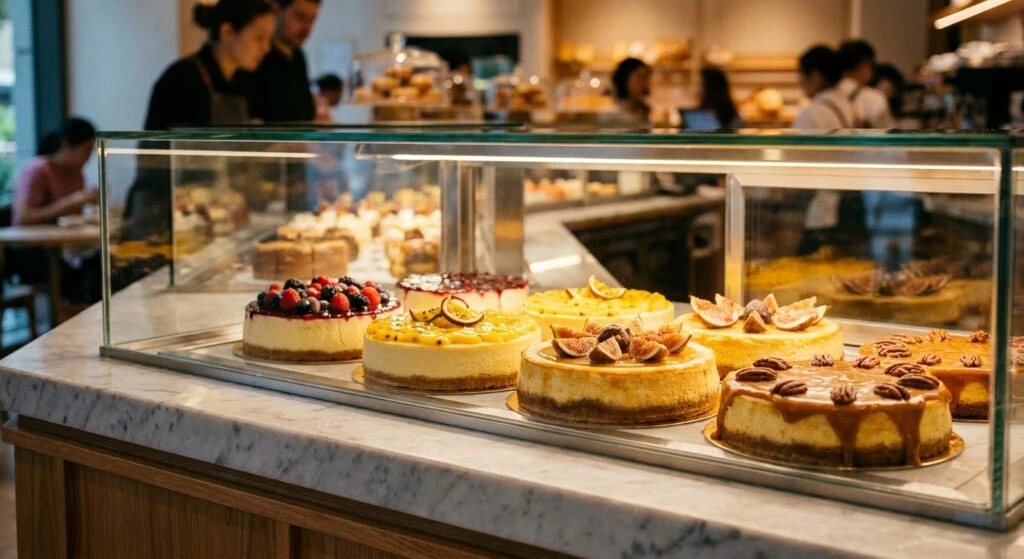
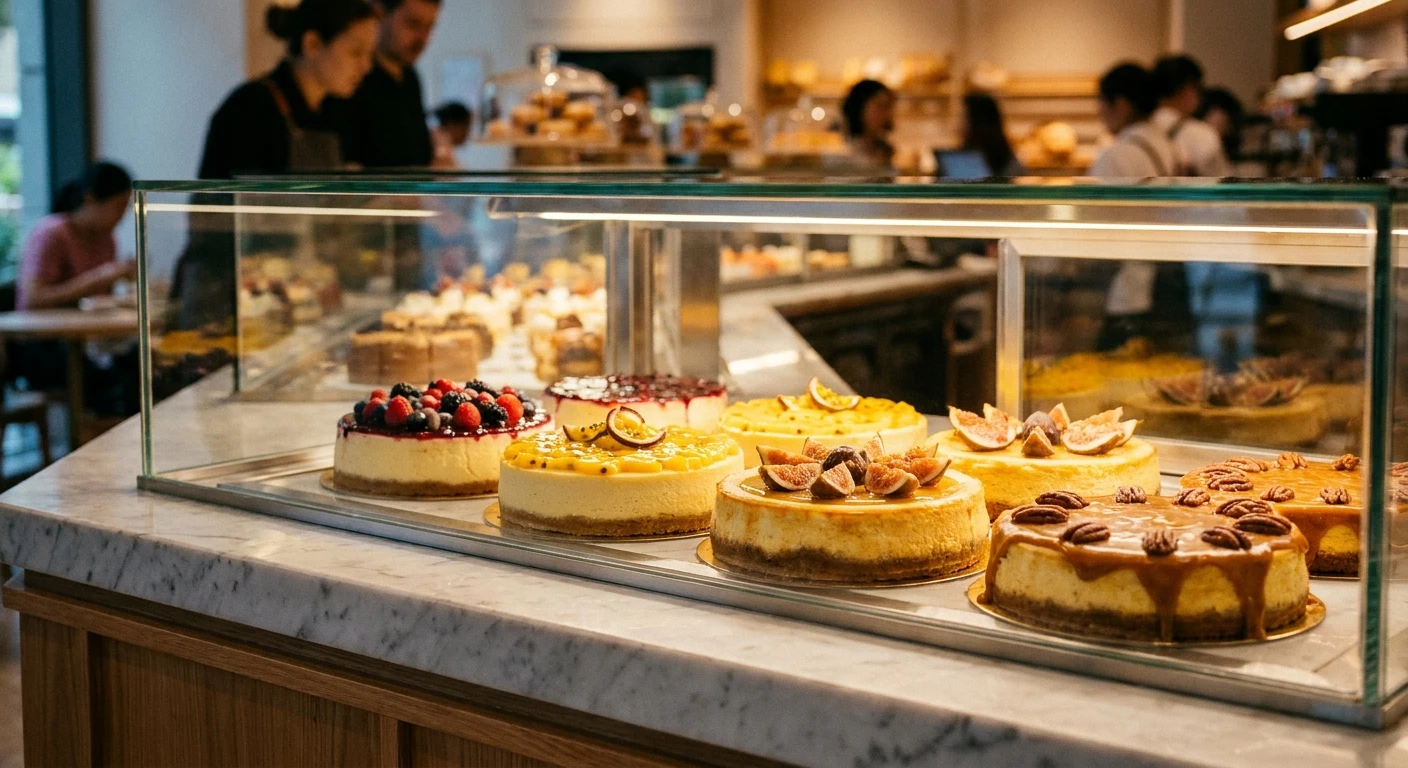
- Examine the display conditions: Premium dairy desserts must be kept in meticulously temperature-controlled, well-lit display cases that prevent condensation from forming on the surface of the cake.
- Verify ingredient sourcing: Look for menus or signage that proudly highlight the use of local dairy, specific types of artisan cheeses, or seasonal toppings.
- Look at the slice profile: A properly baked slice will have a smooth, homogeneous texture without grainy separation, indicating precise temperature control during the baking process.
| Cheesecake Style | Key Characteristics | Best Flavor Pairing |
|---|---|---|
| New York Style | Dense, rich, heavy reliance on cream cheese, firm graham cracker crust. | Fresh strawberry compote or classic cherry topping. |
| Basque Burnt | Crustless, deeply caramelized exterior, gooey and custard-like center. | A glass of dessert wine or a strong shot of dark espresso. |
| Japanese Cotton | Incredibly light, fluffy, aerated texture, sponge-like consistency. | Light dusting of powdered sugar or fresh matcha powder. |
| Italian Ricotta | Slightly grainy, drier texture, subtly sweet, often uses a pastry dough base. | Candied citrus peel, pine nuts, or a drizzle of local honey. |
The Ancient Origins of Cheesecake
The concept of sweetening cheese and baking it into a cake format is far from a modern invention. The earliest recorded mentions trace back to ancient Greece. Historical records indicate that athletes participating in the very first Olympic games in 776 BC were fed a primitive version of this dessert to provide them with high-density energy. The Greek physician Aegimus even wrote a comprehensive manual on the art of making these cheese-based cakes. These early variations were simple combinations of pounded cheese, wheat flour, and honey, baked on rudimentary hot stones.
The Evolution of Cream Cheese
As the Roman Empire expanded, they absorbed the Greek recipes, adding eggs and occasionally baking the mixture under a hot brick. The Romans called their versions “libum” and “placenta.” Centuries later, the recipes spread across Europe, evolving into yeast-based tarts. However, the most significant leap forward occurred in America in 1872. A New York dairy farmer named William Lawrence was attempting to recreate a soft, crumbly French cheese known as Neufchâtel. Instead, he accidentally created a heavier, creamier, and richer product. This accidental invention became the modern cream cheese we know today, fundamentally changing the texture and structural possibilities of the dessert forever.
The Modern State of Artisanal Dessert Shops
Today, the landscape of dedicated bakeries is incredibly diverse. The shift from classic diner-style slices to highly refined, chef-driven creations has elevated the dessert’s status globally. Modern establishments experiment with savory infusions, gluten-free almond flour crusts, and vegan alternatives utilizing cultured cashew bases. The contemporary bakery is a laboratory of flavor, where pastry chefs balance the heavy richness of the dairy with bright, acidic notes from exotic fruits, yuzu, or sharp chocolate ganache. Finding a highly rated shop today means stepping into a world where centuries of tradition meet cutting-edge culinary innovation.
The Chemistry of the Perfect Bake
Creating a flawless texture is an exercise in complex food science. At its core, the batter is a delicate emulsion of fat, water, and protein. When a pastry chef mixes cream cheese, sugar, and eggs, they are creating a matrix. If the ingredients are too cold, the emulsion breaks, resulting in a lumpy, unappealing batter. The dairy fat must be perfectly softened to trap the water content from the eggs. Furthermore, the pH levels of the cheese play a massive role in the final flavor. The natural lactic acid provides that signature tangy bite, which cuts through the heavy lipid profile of the butter and heavy cream.
Emulsions and Protein Coagulation
The actual baking process is where the most critical scientific transformations occur. Eggs are the primary structural binder. As the temperature rises, the egg proteins begin to unfold and then bond together—a process called coagulation. If the heat is applied too rapidly, these proteins contract violently, squeezing out moisture and causing the surface of the cake to crack and fissure. This is precisely why professional bakeries utilize a bain-marie, or water bath, during the baking cycle. The water generates steam and regulates the ambient temperature, ensuring the cake cooks gently and evenly.
- Coagulation Temperatures: Egg proteins begin to set at approximately 160°F (71°C), making low and slow baking absolutely essential for a creamy mouthfeel.
- The Maillard Reaction: The browning of the graham cracker or shortbread crust occurs due to the Maillard reaction, where amino acids and reducing sugars break down under heat to create complex, toasted flavors.
- Hydration and Steam: A high-humidity oven environment prevents the surface of the cake from drying out prematurely, which is a leading cause of deep structural cracking.
- Setting Phase: The dessert is not chemically finished when it leaves the oven. It requires a minimum 12-hour chilling period for the fat molecules to fully crystallize and set.
Step 1: Define Your Preferred Style
Before stepping out the door, you must establish what type of dessert you are actually hunting for. Do you want the heavy, dense, fork-coating richness of a classic New York slice? Or are you seeking the airy, cloud-like experience of a Japanese cotton cake? Knowing your structural and flavor preferences will immediately narrow down which local bakeries are worth your time, as most chefs specialize heavily in one specific regional style.
Step 2: Utilize Hyper-Local Search Tools
Do not just rely on generic maps. Use localized food applications, community boards, and neighborhood social media groups to find hidden gems. Often, the absolute best artisanal bakers operate out of small, unassuming storefronts or even specialized ghost kitchens that might not dominate mainstream search engine results. Look for community consensus and word-of-mouth recommendations.
Step 3: Analyze Customer Reviews for Texture Mentions
When reading online reviews, ignore generic praise like “it was good.” Instead, scan the feedback for specific keywords related to the physics of the cake. Look for terms like “creamy,” “velvety,” “not too dense,” or “perfect crust.” If multiple reviewers complain about a grainy texture, a soggy bottom layer, or an overly gelatinous topping, cross that shop off your immediate list.
Step 4: Verify Ingredient Sourcing and Freshness
Check the bakery’s website or social media presence to see if they discuss their ingredient sourcing. Top-tier pastry chefs take immense pride in their supply chain. If a shop highlights their use of local farm-fresh eggs, premium European butter, or specific high-fat cream cheeses, it is a massive indicator that they treat their craft with the utmost respect and seriousness.
Step 5: Assess the Bakery’s Specialty Focus
Determine if the establishment is a dedicated dessert shop or a general diner where the cake is an afterthought. A specialized bakery that focuses solely on cakes, tarts, and pastries will generally have a higher turnover rate, ensuring that the slice you purchase has not been sitting in a display case absorbing ambient refrigerator odors for three days.
Step 6: Plan the Optimal Pickup Time
Timing is everything in the pastry world. The optimal time to visit a highly rated local shop is mid-morning. By this time, the morning rush has subsided, but the display cases are still fully stocked with the freshest products that have finished their overnight chilling process. Arriving too late in the afternoon often means settling for whatever flavors are leftover.
Step 7: Execute Proper Storage Protocols at Home
Once you secure your prize, how you handle it matters. Never leave dairy-based desserts sitting in a hot car. Upon arriving home, if you are not eating it immediately, store it in the coldest part of your refrigerator. Wrap the pastry box tightly in plastic wrap or transfer the slice to an airtight container to prevent the fats in the cheese from absorbing the flavors of other foods in your fridge.
Myths vs. Reality: Separating Fact from Fiction
Myth: All baked cheese-based desserts are inherently heavy and sit like a brick in your stomach.
Reality: Texture is entirely dependent on the regional style and preparation method. Japanese and French variations incorporate deeply whipped egg whites or heavy cream folded in at the last minute, resulting in highly aerated, mousse-like textures that are incredibly light on the palate.
Myth: You should serve the dessert immediately after it finishes baking and cooling to room temperature.
Reality: Cutting into a freshly baked cake will result in a messy, unstructured slice. The fats and proteins chemically require a sustained period of cold refrigeration (usually 12 to 24 hours) to crystallize, meld flavors, and achieve that signature clean slice.
Myth: A crack on the surface means the baker ruined the cake.
Reality: While pastry chefs strive for a flawless, smooth top for aesthetic reasons, surface cracks are merely a cosmetic issue caused by rapid temperature fluctuations or slight overmixing. The flavor and internal texture of a cracked cake are usually completely unaffected and just as delicious.
Does a local bakery offer gluten-free options?
Yes, many modern artisanal shops offer gluten-free alternatives. They typically achieve this by swapping out the traditional wheat-based graham cracker crust for bases made from crushed almonds, pecans, or certified gluten-free oat cookies. The filling itself is naturally gluten-free, provided the baker does not use flour as a thickening agent.
How long does fresh artisan cheesecake last?
When stored properly in a consistently cold refrigerator, a freshly baked artisanal slice will maintain its peak quality for about three to five days. It is crucial to keep it in an airtight container to prevent the high fat content from absorbing surrounding odors from other foods.
What is the difference between New York and regular cheesecake?
The New York style is defined by its heavy reliance on pure cream cheese, the addition of heavy cream or sour cream, and an extra egg or egg yolk. This precise formulation creates an intensely dense, rich, and firm texture compared to “regular” or Italian variations, which often use lighter ricotta cheese and have a slightly grainier, fluffier consistency.
Can I freeze a whole bakery cheesecake?
Absolutely. These heavy dairy desserts freeze exceptionally well due to their high fat content. To freeze one, chill it completely, wrap it tightly in a layer of plastic wrap followed by a layer of heavy-duty aluminum foil. It will keep for up to two months. Thaw it slowly in the refrigerator for 24 hours before serving.
Why are artisanal slices more expensive?
The cost reflects the price of premium, raw ingredients. Authentic vanilla beans, high-fat artisan cheeses, fresh local eggs, and real butter are significantly more expensive than the artificial flavorings, hydrogenated oils, and chemical stabilizers used by commercial grocery store brands.
Do shops usually offer vegan alternatives?
Increasingly, yes. Many progressive bakeries have developed sophisticated vegan versions. These are typically crafted using soaked and blended raw cashews, coconut cream, and silken tofu to replicate the creamy texture and dense mouthfeel of traditional dairy without compromising on structural integrity.
Is a water bath strictly necessary for home bakers?
While some recipes claim you can skip it, using a water bath (bain-marie) is highly recommended for any baked custard. The water regulates the ambient heat, keeping the temperature around the pan at a gentle, consistent level, which prevents the eggs from overcooking and the surface from aggressively cracking.
The Final Word on Finding Your Perfect Slice
Tracking down the finest desserts your local area has to offer is an adventure in culinary appreciation. By understanding the rigorous science of the bake, the historical evolution of the ingredients, and the meticulous care required to produce a premium product, you elevate yourself from a casual consumer to an informed connoisseur. The difference between a mass-produced frozen block and a hand-crafted, beautifully balanced artisanal cake is night and day. Now that you are equipped with the exact criteria, knowledge, and step-by-step methodology to evaluate local bakeries, it is time to take action. Map out your local spots, check their credentials, and go secure your perfect slice today!