
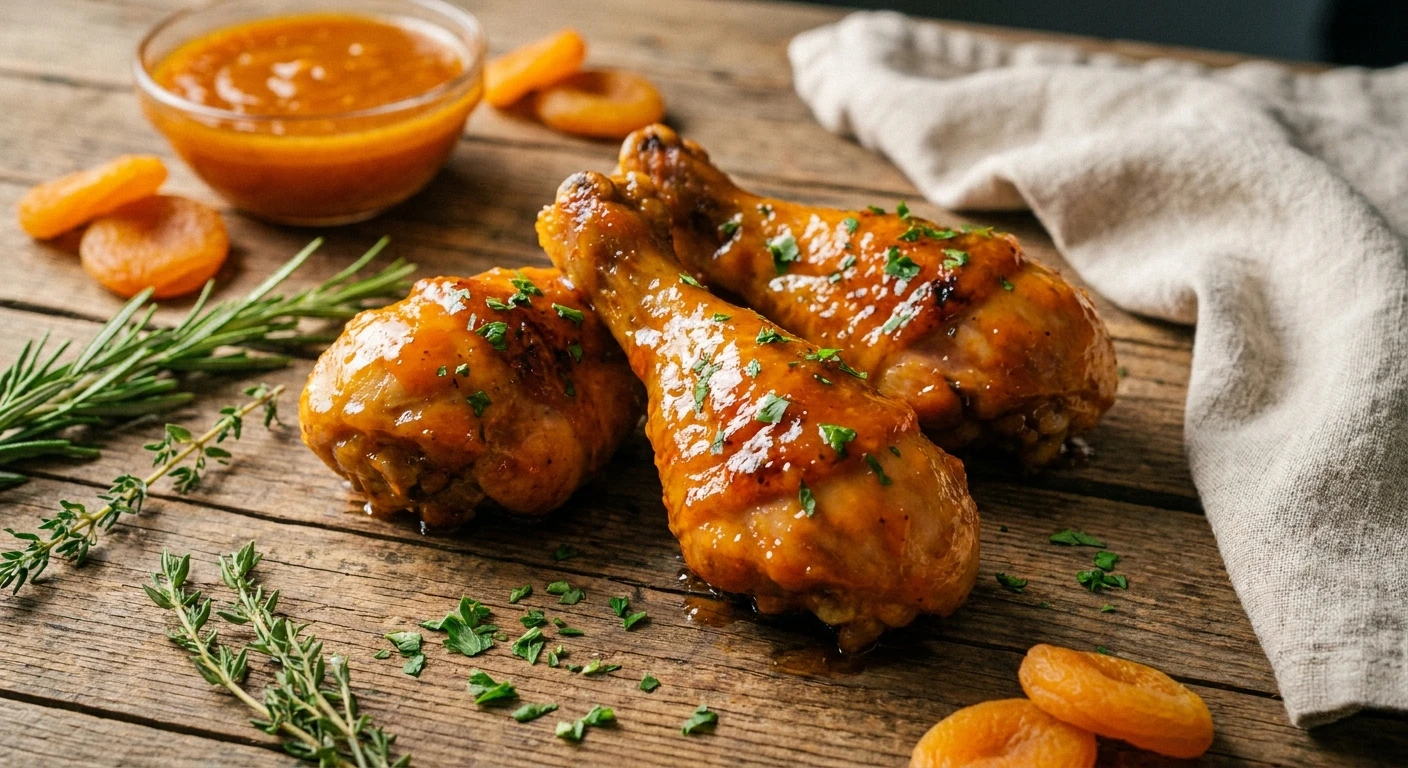
The Ultimate Guide to Perfect Apricot Chicken Drumsticks
Cooking flawless apricot chicken drumsticks requires understanding the delicate balance between sweet fruit preserves and savory roasted poultry. This culinary combination is highly regarded because the natural sugars in the fruit create an exceptionally sticky, caramelized exterior while the bone-in dark meat remains tender and juicy inside. Preparing this dish is an exercise in mastering flavor profiles, contrasting the rich, earthy notes of the dark meat with the bright, acidic sweetness of the fruit glaze. Our comprehensive analysis provides a meticulous breakdown of the chemical reactions involved in sugar caramelization, the historical context of pairing sweet and savory ingredients, and highly actionable, step-by-step instructions to achieve a flawless crust on your poultry. You will find that utilizing bone-in, skin-on drumsticks is vastly superior for this cooking method, as the rendered fat interacts seamlessly with the glaze to form an emulsion that clings to the meat. Mastering this specific technique elevates standard weeknight dinners into sophisticated culinary presentations. By following exact temperature guidelines and basting schedules, you can consistently produce restaurant-quality results that maximize both texture and flavor integrity. The following sections provide a rigorously detailed methodology for perfecting this beloved dish.
Why This Flavor Profile Succeeds
The core success of this preparation method lies in the strategic layering of opposing taste sensations. By combining sweet fruit preserves with savory umami agents like soy sauce and pungent elements like Dijon mustard or raw garlic, you create a complex flavor matrix. This specific glaze operates as a natural tenderizer and a texturizing agent simultaneously. The primary value of utilizing apricot preserves lies in its exceptionally high pectin content, which acts as a powerful natural thickener under heat. For instance, when mixed with an acid like apple cider vinegar, it creates a robust emulsion that clings tenaciously to the drumstick rather than running off into the roasting pan. Another example is its inherent acidity, which effectively cuts through the rich, heavy fat of the dark meat, significantly elevating the overall mouthfeel and preventing the dish from tasting overly cloying. Proper execution requires understanding how these ingredients interact under high heat.
The essential components for crafting the perfect sticky glaze include:
Read also: Top high protein ready meals for active lifestyles; Who Is sebastian robinson? A Guide.
- A high-quality, pectin-rich fruit base to build the necessary sticky texture and structural integrity.
- Savory umami elements, specifically fermented soy or Worcestershire sauce, to counterbalance the heavy sweetness.
- Aromatic compounds, such as freshly grated ginger, minced garlic, or toasted sesame oil, to provide profound depth and aromatic complexity.
| Glaze Base Component | Primary Culinary Function | Heat Tolerance Threshold |
|---|---|---|
| Traditional Apricot Preserves | Provides foundational sweetness, high pectin for thick texture, and a bright fruit acid profile. | Moderate; prone to burning if exposed to high heat for extended periods. |
| Soy Sauce or Tamari | Introduces essential sodium and deep umami notes, enhancing the savory meat flavor. | High; extremely stable during long roasting processes. |
| Dijon Mustard | Acts as an emulsifying agent to bind the sugar and soy sauce, adding sharp pungency. | High; maintains structural integrity and flavor under intense oven heat. |
Origins of Sweet and Savory Meat Dishes
The culinary philosophy of pairing sweet fruit with savory meat is not a modern invention. The origins of blending apricots with poultry can be traced back to ancient Persian and Middle Eastern cuisines, where slow-cooked tagines and rich stews heavily featured dried fruits, nuts, and complex spice blends. In these historical contexts, the natural sweetness of dried apricots was utilized to balance the intense flavors of wild game and domestic poultry. This early mastery of contrasting flavors laid the foundational groundwork for modern fruit-glazed meat preparations, proving that the human palate is naturally drawn to the intersection of sugar, salt, and fat.
The Mid-Century Evolution of Fruit Glazes
During the mid-20th century, particularly in Western domestic cooking, there was a massive surge in convenience-based culinary techniques. Home cooks began experimenting with readily available pantry staples, leading to the creation of iconic, simple glazes. The combination of jarred apricot jam and dry onion soup mix or bottled salad dressing became a staple of 1970s dinner parties. This era prioritized ease and accessibility, demonstrating that complex flavor profiles could be achieved without extensive preparation time. The structural integrity of drumsticks made them the perfect canvas for these heavy, sticky sauces, as they could withstand long baking times without drying out.
Modern State of Poultry Preparation
Today, the preparation of this classic dish has evolved into a more refined culinary art. Contemporary chefs and dedicated home cooks have moved away from overly processed shortcuts, opting instead for high-quality, low-sugar preserves, freshly grated aromatics, and precise temperature control. The focus has shifted toward achieving the perfect Maillard reaction on the chicken skin before applying the glaze, ensuring a crispy texture beneath the sticky exterior. Modern techniques utilize digital meat thermometers and specific basting intervals, elevating a historically simple convenience meal into a technically precise, gourmet experience.
The Maillard Reaction and Sugar Caramelization
Understanding the science behind the cooking process is crucial for optimal results. The Maillard reaction is a chemical process between amino acids and reducing sugars that gives browned food its distinctive flavor. When preparing poultry, achieving this reaction on the skin is essential before introducing the glaze. If the sugar-heavy sauce is applied too early, the fructose will caramelize and rapidly transition into carbon (burning) before the connective tissues in the dark meat have had time to properly break down. The transition of collagen into gelatin within the drumstick requires prolonged exposure to heat, which is why temperature management is the most critical scientific variable in this recipe.
Pectin Chemistry in Sticky Glazes
The texture of the sauce relies entirely on the behavior of hydrocolloids, specifically pectin found in the fruit. When exposed to heat and acid, pectin strands unravel and bind together, forming a gel matrix. This matrix is what allows the sauce to thickly coat the chicken rather than becoming a thin liquid.
- Fructose caramelizes at roughly 230 degrees Fahrenheit, requiring careful oven monitoring to prevent bitter, burnt flavors.
- Dark meat contains significantly higher levels of myoglobin and connective tissue, requiring internal temperatures of at least 175 degrees Fahrenheit for optimal tenderness.
- Pectin forms a stable gel matrix when heated with sugar and acid, coating the chicken skin evenly and providing the signature sticky finish.
Step 1: Selecting the Right Poultry
Begin by sourcing high-quality, bone-in, skin-on drumsticks. The skin is an absolute requirement, as it acts as a protective barrier, rendering out fat and providing a surface for the glaze to adhere to. Inspect the meat for an even pink color and ensure the pieces are relatively uniform in size to guarantee an even cooking time across the entire batch.
Step 2: Preparing the Dry Rub Base
Moisture is the enemy of crispy poultry. Thoroughly pat each piece completely dry using heavy-duty paper towels. Apply a foundational dry rub consisting of kosher salt, freshly cracked black pepper, smoked paprika, and garlic powder. This initial seasoning layer draws out surface moisture and establishes a savory baseline flavor that will contrast perfectly with the incoming sweet sauce.
Step 3: Crafting the Apricot Emulsion
In a heavy-bottomed saucepan, combine one cup of high-quality apricot preserves with three tablespoons of low-sodium soy sauce, one tablespoon of Dijon mustard, and minced garlic. Heat this mixture gently over low heat until the preserves melt completely and the ingredients emulsify into a smooth, cohesive glaze. Remove from heat and divide the sauce to prevent cross-contamination.
Step 4: The Initial High-Heat Roast
Preheat your oven to 400 degrees Fahrenheit. Place the seasoned, unglazed poultry on a wire rack set inside a foil-lined baking sheet. Roasting on a wire rack allows hot air to circulate completely around the meat, rendering the fat evenly. Bake for 25 minutes without any sauce to establish a firm, slightly crispy outer texture.
Step 5: The Basting Phase
Remove the pan from the oven and lower the temperature to 375 degrees Fahrenheit. Using a silicone brush, generously coat every surface of the meat with the prepared emulsion. Return the pan to the oven for 10 minutes. Repeat this basting process twice more, building layers of sticky, caramelized flavor with each application.
Step 6: Achieving the Caramelized Crust
For the final 3 to 5 minutes of cooking, engage the oven broiler. Watch the poultry continuously during this stage, as the high sugar content can transition from beautifully caramelized to burnt in a matter of seconds. The goal is a bubbling, dark amber crust with slight charring on the extreme edges.
Step 7: Resting for Moisture Retention
Remove the pan from the oven once the internal temperature registers 175 degrees Fahrenheit on a digital meat thermometer. Do not serve immediately. Allow the meat to rest at room temperature for at least 10 minutes. This resting period allows the violently boiling internal juices to settle and redistribute throughout the muscle fibers, ensuring maximum juiciness upon serving.
Common Misconceptions Addressed
Myth: Sweet fruit sauces will inevitably burn in a hot oven.
Reality: Burning only occurs when high-sugar glazes are applied at the very beginning of the cooking process. Applying the sauce during the final 20 minutes prevents carbonization while still allowing for rich caramelization.
Myth: Marinating the chicken in the jam mixture overnight yields better flavor.
Reality: Thick, pectin-heavy glazes are surface treatments. They do not penetrate the dense muscle fibers of the meat. A dry salt brine is far more effective for internal seasoning.
Myth: White meat like chicken breasts works just as well for this specific recipe.
Reality: Breast meat lacks the necessary fat content and connective tissue to withstand the double-cooking process required to set a sticky glaze, resulting in a dry, stringy texture.
Can I use fresh fruit instead of preserves?
Yes, but fresh fruit must be slowly simmered down with added sugar, water, and acid for up to an hour to create the necessary jam-like consistency and activate the natural pectins required for sticking.
What is the absolute best oven temperature?
An initial roast at 400 degrees Fahrenheit to render fat, followed by a reduction to 375 degrees during the basting phase to prevent the sugars from burning.
Do I need to remove the skin?
No. Keeping the skin on is highly recommended. It protects the meat from drying out and provides the necessary texture for the sauce to adhere properly.
How do I properly store leftovers?
Store in an airtight glass container in the refrigerator for up to four days. Reheat gently in a 350-degree oven to prevent the sugars from scorching.
Can I make this in an air fryer?
Yes. Cook at 380 degrees for 20 minutes, applying the sticky sauce only during the final 5 minutes to prevent extensive burning on the heating elements.
What side dishes pair well with this meal?
Savory, neutral sides work best. Consider roasted root vegetables, fluffy quinoa, or steamed jasmine rice to soak up the intense, flavorful drippings.
Is it possible to use sugar-free preserves?
You can, but the lack of real sucrose will severely impact the caramelization process, resulting in a thinner coating and a less glossy finish.
In conclusion, mastering apricot chicken drumsticks is a rewarding culinary endeavor that combines basic food science with accessible ingredients. By respecting the cooking temperatures, prioritizing the Maillard reaction before applying sugars, and managing the basting schedule, you guarantee a spectacular meal. Take action today, gather these simple ingredients, and experience the perfect harmony of sweet and savory in your own kitchen!