
Why Every Parent is Talking About the moochies watch
If you are wondering whether a moochies watch is actually worth the hype, you are definitely not alone. The struggle to keep our kids safe while letting them explore is real. Just the other day, I was sitting in a bustling cafe near Zoloti Vorota in Kyiv, sipping a flat white. I watched a mom peacefully reading her book while her energetic six-year-old ran wild across the nearby playground. She wasn’t nervously scanning the crowd every five seconds or hovering over his shoulder. How? She just tapped a bright little screen on her wrist, completely relaxed, knowing her kid was safe thanks to a dedicated children’s smartwatch. That profound peace of mind is exactly what we all want as parents.
I’ve tested countless gadgets and gizmos, but finding the right balance between child safety and independence always feels like a massive headache. We want to protect them, but giving a seven-year-old a fully functional smartphone is a recipe for disaster. This guide breaks down exactly how these wearable devices work, why they give parents ultimate relief, and how to set them up without tearing your hair out. The tech for kids has gotten shockingly good. No complicated web browsers, no endless social media scrolling—just reliable tracking, voice calling, and SOS features wrapped up in a rugged little strap. Grab your coffee, make yourself comfortable, and let’s walk through everything you need to know about setting up and using this clever piece of wearable tech for your family.
Core Benefits: Balancing Independence and Safety
What makes this device genuinely useful rather than just another flashy toy that ends up forgotten in a desk drawer? The core value comes down to a perfectly balanced communication loop. You get GPS tracking and direct calling, but your child doesn’t get access to an open internet browser or a chaotic app store. It is purely about connection. Let me give you two specific examples of why this is a game-changer.
First, imagine your child accidentally takes the wrong bus home from school. Instead of sheer panic setting in, they simply press the side button, and you instantly receive a voice call while your phone maps their exact geographical location. Second, think about weekend bike rides around the neighborhood. You can easily set up virtual fences. This means you get a silent ping on your phone the second they ride past the designated boundary of your street. It’s brilliant.
| Feature Comparison | Kids Smartwatch | Standard Smartphone |
|---|---|---|
| GPS Accuracy | High (Pinpoint tracking) | High (Background tracking) |
| Social Media Access | Zero (Complete safety) | Full (Highly risky for kids) |
| Physical Durability | High (Playground safe) | Low (Screens break easily) |
Here are the absolute top features you get:
- Instant SOS Calling: A single long press dials the primary emergency contacts in sequence until someone answers.
- Real-Time GPS Tracking: Precision location monitoring straight to your smartphone app.
- Class Mode: Locks the device during school hours so it acts purely as a traditional timepiece, preventing classroom disruptions.
The Evolution of Kids Wearables
Origins of Kids’ Tracking Tech
The journey to reliable kids’ tech wasn’t an overnight success. Back in the early 2010s, parents were desperate for a way to keep tabs on their kids, resulting in clunky GPS tags that you had to attach to backpacks. They were heavy, easily lost, and the batteries barely lasted an afternoon. Kids hated wearing them, and parents hated maintaining them. The functionality was strictly one-way: you could see where the backpack was, assuming the child hadn’t left it under a tree.
Evolution of Safety Tech
As cellular networks improved, the wearable market began experimenting with 2G watches. These early models introduced the concept of voice calling on a wrist device, but the signal was constantly dropping. Call quality sounded like you were talking through an underwater tin can. Furthermore, the interfaces were incredibly frustrating. Parents had to send SMS text codes just to configure basic settings or retrieve a location update. It was a chaotic era of trial and error, but it proved one crucial thing: parents absolutely loved the concept of wrist-based communication for young kids.
Modern State of Smartwatches
Now that we are in 2026, the technology has reached a point of brilliant refinement. The transition to 4G LTE networks fundamentally changed how these devices operate. They are no longer just basic trackers; they are robust micro-computers utilizing multiple positioning systems. The materials are hypoallergenic, the screens are tough, and the software is incredibly intuitive. The modern wearable perfectly mimics the cool aesthetic of adult smartwatches, making kids genuinely excited to put them on every single morning.
Technical Deep Dive: How the Magic Happens
The GPS and LBS Technology Inside
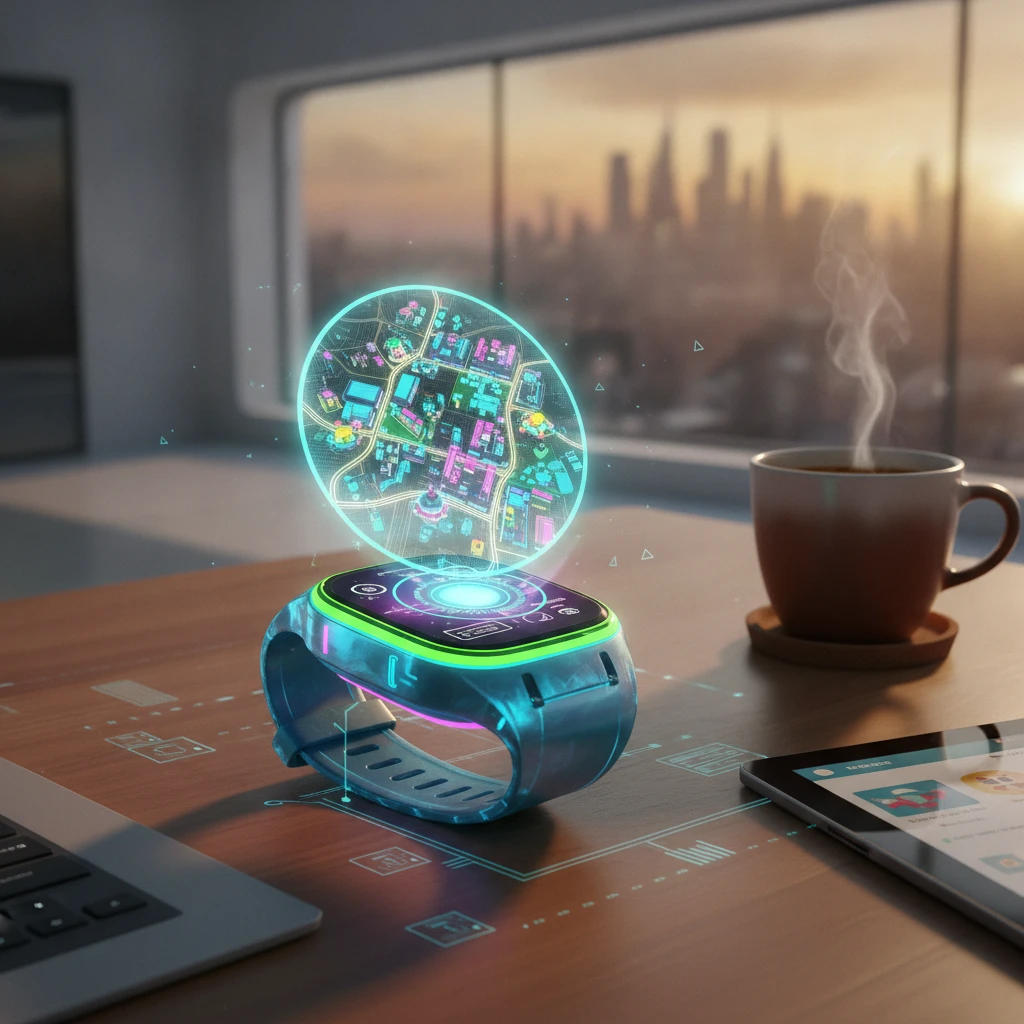
You might be wondering how such a tiny device can pinpoint a child rushing down a slide with such accuracy. It relies on a hybrid location system. Primarily, it uses standard GPS (Global Positioning System) which communicates directly with satellites to get an exact fix when the child is outdoors. However, GPS struggles inside thick concrete buildings like schools or malls. That is where LBS (Location-Based Services) and Wi-Fi positioning take over. The watch scans for nearby cellular towers and Wi-Fi networks to triangulate a location indoors. This seamless switching between tracking methods ensures you are never left guessing where they are.
Battery Chemistry and Durability Specs
Powering a cellular radio, a GPS chip, and a color screen from a tiny battery is an engineering marvel. These devices utilize high-density lithium-polymer batteries. Unlike older battery tech, they manage power efficiently by putting the GPS to sleep when the watch detects it isn’t moving. Furthermore, the entire casing is heavily sealed.
Here are the hard technical facts powering the experience:
- IP67 Water Resistance: Can withstand splashes, rainstorms, and accidental dunks in the sink without frying the motherboard.
- End-to-End Encryption: All location data sent between the device and the parent’s app is securely encrypted to prevent unauthorized tracking.
- Low-Emission Antennas: Specifically designed to emit significantly lower radiation (SAR values) compared to standard adult cell phones, making it completely safe for continuous skin contact.
The 7-Day Integration Plan
Day 1: Unboxing and SIM Setup
Keep the excitement high by unboxing the device together. Show your kid the cool strap and let them put it on. Before you power it up, carefully insert the activated SIM card (if required) and plug the device into its magnetic charger. Make sure you hit 100% battery before moving forward. This is all about establishing a routine of charging it at night.
Day 2: App Pairing and Profile Creation
Download the companion app on your personal smartphone. Create your administrative account and pair the device. This usually involves scanning a QR code displayed on the watch screen. Once linked, input your child’s basic details and set yourself up as the primary emergency contact. Test the connection by sending a quick voice note.
Day 3: Setting Up Safe Zones
Sit down with the app and draw out your geofences. Create a safe zone around your house, their school, and maybe a grandparent’s house. Explain to your kid what these invisible fences mean. Tell them, “When you reach Grandma’s, my phone gives me a happy little beep so I know you made it!”
Day 4: The SOS Drill
This is crucial. You need to build muscle memory. Have your child press and hold the SOS button until the alert triggers. Let them hear how your phone rings and what the alarm looks like. Assure them that they will not get in trouble for using it if they feel scared or lost. Practice this drill twice.
Day 5: Voice Calling Practice
Populate the approved contacts list. Add mom, dad, siblings, and maybe a trusted aunt. Show your child how to swipe through the contacts menu and initiate a call. Go into another room and have a quick, fun chat with them over the device. Teach them to speak clearly into the microphone.
Day 6: Testing Class Mode
Configure the ‘Do Not Disturb’ or Class Mode schedule to match their exact school hours. Explain to them that the watch will just show the time during these hours so they can focus on their teacher. Send them to school with the watch on, and check your app to ensure the restriction activated automatically.
Day 7: Full Independence Day
Let them go out to the local park or ride their bike a little further down the street than usual. Give them the freedom to explore, knowing you have a digital safety net right there in your pocket. Celebrate their successful first week as a responsible tech user.
Myths vs. Reality
There is a lot of misinformation floating around parenting groups regarding wearable tech. Let’s clear the air.
Myth: Hackers can easily intercept the signal and track my child.
Reality: Reputable brands utilize bank-level AES encryption for all data transfers. Only authorized, paired accounts can request or view location data.
Myth: It will be a massive distraction in the classroom and get confiscated.
Reality: By utilizing the automated Class Mode, the screen locks during school hours. It becomes nothing more than a standard digital clock until the final bell rings.
Myth: The battery will die in two hours if they play with it.
Reality: While intense continuous calling drains power, modern firmware heavily optimizes battery life. Under normal usage, it easily lasts a full active day, often pushing into a second day on standby.
Frequently Asked Questions
Does the device require a separate SIM card?
Most models either come with an integrated eSIM that requires a small monthly subscription plan, or they allow you to insert a standard Nano-SIM from your preferred network provider.
Can my child browse the internet on it?
No. These devices are intentionally completely locked down. There is no web browser, no access to social media, and no way to download unapproved third-party games.
Who can call my child’s device?
Only the specific phone numbers you manually approve and enter into the companion app’s contact list can call the device. All unknown numbers are automatically blocked and rejected.
Is it completely waterproof?
While highly water-resistant (usually IP67), it is meant to survive rain, sweat, and washing hands. It is generally not recommended for deep swimming or hot showers.
Will it work if we travel overseas?
This depends entirely on the cellular plan tied to the SIM card. If your plan includes international roaming, the device will connect to local networks abroad just like your smartphone does.
Can they send text messages?
Typing on a tiny screen is frustrating, so most models rely on short voice messages and a selection of pre-set emojis or quick text templates for messaging.
What is the ideal age range for this tech?
The sweet spot is typically between 5 and 11 years old. It is perfect for kids who are active and gaining independence but are still too young for the responsibilities of a full smartphone.
Getting a smart wearable for your child is one of the best decisions you can make for your own peace of mind. It bridges the gap between anxious parenting and giving your kid the freedom they need to grow. If you want to keep them safe while keeping things simple, grab one, set up your safe zones, and enjoy the relief. Make the smart choice for your family today!