
The Phenomenon of Dim Sim Lim
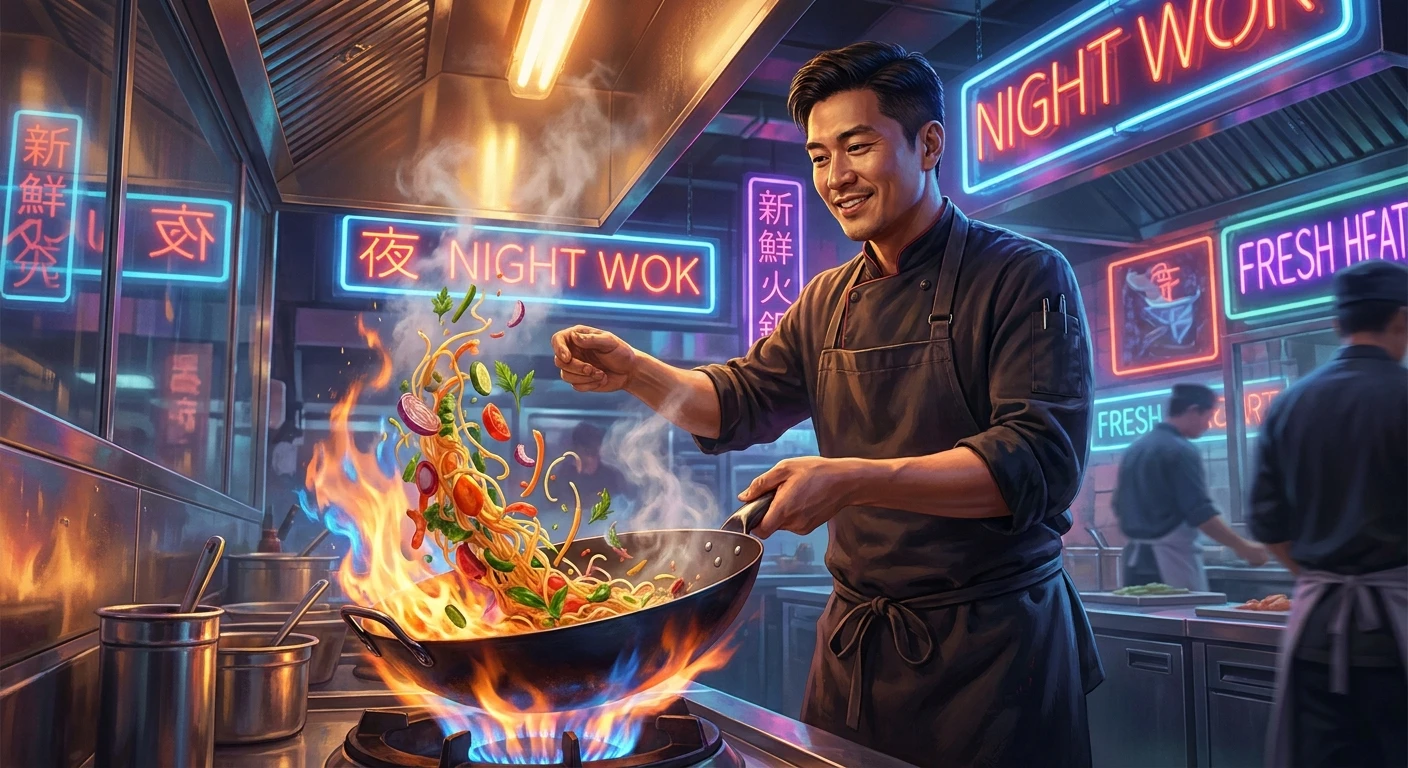
You know exactly what happens when those late-night cravings hit, and standard home cooking just will not cut it. Enter Dim Sim Lim, the internet’s favorite culinary disruptor who dragged the closely guarded secrets of the commercial Chinese kitchen straight onto your smartphone screen. If you have ever scrolled through food videos, you have probably paused to watch a massive carbon steel wok bursting into flames, commanded by a chef who promises to make your home cooking taste exactly like your favorite local takeout. Vincent Lim, the charismatic creator behind the Dim Sim Lim persona, has completely revolutionized how everyday home cooks approach Asian cuisine. Instead of keeping restaurant techniques hidden behind the swinging kitchen doors, he throws them wide open.
His thesis is incredibly straightforward yet brilliantly executed: professional-level Chinese takeout is not magic; it is simply a combination of high heat, proper ingredient preparation, and the unapologetic use of robust flavor enhancers. By stripping away the intimidation factor usually associated with blazing commercial burners, he gives everyday food lovers the exact blueprint to recreate iconic dishes like Mongolian beef, honey chicken, and special fried rice right in their own kitchens. Forget everything you thought you knew about bland weeknight dinners, because the wok is hot and the masterclass is officially in session.
Read also: Perfect Apricot Chicken Drumsticks Recipe; Top high protein ready meals for active lifestyles.
Bridging the Gap Between Restaurant and Home Kitchens
Why do millions of people tune in to watch a guy vigorously toss noodles in a fiery pan? Because the value he brings directly solves the ultimate foodie frustration: cooking a meal that actually tastes like the ones you buy. Traditional culinary media often makes Asian cooking seem impossibly complex or stubbornly traditional. The Dim Sim Lim method shatters that barrier by blending high-energy entertainment with legitimate, replicable kitchen science.
Take a look at how different culinary approaches stack up when you are trying to get dinner on the table:
| Culinary Approach | Accessibility for Beginners | Expected Flavor Profile |
|---|---|---|
| Traditional Culinary School | Low – High cost, steep learning curve | Refined, subtle, but often lacks street-food punch |
| Dim Sim Lim Method | High – Uses standard tools with smart workarounds | Explosive umami, bold, authentic takeout taste |
| Standard Home Cooking | Maximum – Anyone can do it instantly | Often flat, missing key aromatics and depth |
His core value proposition rests on proving that you do not need a twenty-thousand-dollar kitchen setup to achieve greatness. For example, he frequently demonstrates how pre-heating a standard home wok and working in smaller batches can mimic the fierce heat of a commercial jet burner. Another prime example is his fearless reclamation of MSG, teaching home cooks to use it precisely to achieve that elusive mouth-watering savory note that sets restaurant food apart.
To truly master this style of cooking, you must internalize three non-negotiable principles:
- Preparation is Everything: Also known as “mise en place,” you must have every sauce mixed, garlic minced, and protein chopped before the flame ever touches the metal. Wok cooking happens in seconds, not minutes.
- Texture Manipulation: Through techniques like velvetting (using baking soda or cornstarch), you physically alter the structure of cheap meat cuts to make them melt-in-your-mouth tender.
- Fearless Seasoning: You cannot be shy with aromatics, soy sauces, or flavor enhancers if you want a dish that punches you in the tastebuds.
The Origins of a Wok Master
Every great culinary figure has a background deeply rooted in practical experience, and Vincent Lim is no exception. Growing up immersed in the demanding environment of his family’s restaurant business, specifically the Lawson Chinese Restaurant, he absorbed the rhythmic chaos of a commercial kitchen. It was not about plating delicate tweezers-arranged microgreens; it was about feeding hundreds of hungry customers consistently, quickly, and deliciously. This baptism by fire meant he learned the physical mechanics of wok tossing, heat management, and flavor balancing before he even considered pointing a camera at himself. The grueling hours spent next to roaring jet burners forged a deep understanding of what makes takeout food universally loved.
The Evolution of Chinese Takeout Media
Food media used to be strictly confined to pristine television studios where hosts whispered gently over simmering pots. When social media platforms exploded, the game shifted entirely. Short-form video demanded immediate visual impact, and nothing delivers visual impact quite like a massive plume of fire erupting from a seasoned wok. Dim Sim Lim recognized early on that the loud, chaotic, and energetic nature of a real Chinese kitchen was perfect for the digital age. He transitioned from purely physical cooking to becoming a digital educator, blending fast-paced editing, loud exclamations, and highly visual cooking cues. This evolution took Chinese cooking out of niche cookbooks and planted it squarely on the trending pages of millions of young, eager home cooks.
The Modern State of Culinary Content Creation
Today, the landscape of digital cooking is highly saturated, but creators who offer genuine utility alongside entertainment rise to the top. The modern state of his platform represents a massive global community. People from all over the world, who may not have access to a local Chinatown, are now actively sourcing dark soy sauce, Shaoxing wine, and carbon steel woks. He has sparked a tangible movement that destigmatizes takeout culture, elevating it to a respected culinary art form. By relentlessly breaking down the steps to perfection, he proves that modern food content can be raw, loud, and incredibly educational all at once.
The Thermodynamics of Wok Hei
If you want to cook like a takeout legend, you need to understand the physics of “Wok Hei,” which beautifully translates to the “breath of the wok.” This is not a mystical flavor; it is a rapid, intense series of chemical reactions. When a wok reaches extreme temperatures (often exceeding 300 degrees Celsius), the oil aerosolizes. As the chef tosses the food into the air, these microscopic oil droplets catch the flame from the burner below, creating a brief but intense burst of fire. This rapid combustion introduces a distinctly smoky, slightly charred flavor to the ingredients without burning them. It requires precise thermodynamics: the metal must be highly conductive, the heat source immensely powerful, and the tossing motion perfectly timed to allow oxygen to fuel the combustion.
The Chemistry of MSG and Umami
Perhaps no ingredient is more closely associated with Dim Sim Lim’s energetic videos than MSG (Monosodium Glutamate). Rather than treating it as a taboo, he embraces its scientific brilliance. Umami, the fifth basic taste alongside sweet, sour, salty, and bitter, is simply the detection of glutamates by our taste receptors. MSG is the purest crystallized form of this amino acid.
- Flavor Amplification: MSG does not bring its own distinct flavor like salt or sugar; instead, it binds to receptors on your tongue, physically amplifying the savory notes of the surrounding ingredients.
- Sodium Reduction: MSG contains roughly one-third the amount of sodium found in regular table salt, allowing cooks to dramatically enhance flavor while potentially lowering overall sodium content.
- Natural Occurrence: The exact same glutamates found in MSG naturally exist in heavy concentrations in tomatoes, parmesan cheese, mushrooms, and human breast milk.
- Maillard Reaction Catalyst: When combined with high heat and proteins, the presence of amino acids accelerates the browning process, creating deeper, more complex roasted flavors in a shorter amount of time.
Day 1: Seasoning Your Carbon Steel Wok
Before you chop a single vegetable, you need the right tool. A bare carbon steel wok must be seasoned. Scrub away the factory protective oil with harsh soap and steel wool. Then, place it over high heat until the steel turns a brilliant blue-black color as the metal oxidizes. Wipe it down with a microscopically thin layer of high-smoke-point oil (like peanut or grapeseed oil) and heat it until it smokes. Repeat this until a slick, black, non-stick polymer layer forms on the surface.
Day 2: Mastering the Art of Velvetting Meat
Takeout meat is famously tender, and the secret is velvetting. Take cheap cuts of beef or chicken, slice them thinly against the grain, and massage them with a mixture of baking soda, cornstarch, a splash of water, and dark soy sauce. Let it sit for twenty minutes. The alkaline nature of the baking soda breaks down the tough muscle fibers, while the cornstarch creates a protective gelatinous barrier that keeps the moisture locked inside during high-heat cooking.
Day 3: Perfecting the Fried Rice Base
You cannot make amazing fried rice with freshly cooked, steamy grains. Cook your jasmine rice the day before and leave it uncovered in the fridge overnight. The refrigeration process undergoes starch retrogradation, drying out the exterior of each grain. When this dry rice hits the hot oil in your wok, it fries individually instead of clumping together into a mushy porridge, giving you that distinct restaurant texture.
Day 4: Creating the Ultimate Sweet and Sour Sauce
Ditch the bottled stuff. A proper takeout sweet and sour sauce relies on a perfect balance of acidity and sweetness. Combine white vinegar, sugar, a touch of ketchup (for color and base flavor), a splash of pineapple juice, and a slurry of cornstarch. Simmer it until it thickens into a glossy, sticky glaze that perfectly coats crispy fried chicken without making it soggy.
Day 5: Embracing MSG for Maximum Umami
Today is the day you conquer any lingering fears of flavor enhancers. Cook two identical portions of a simple garlic stir-fry. In one, use only salt. In the other, replace half the salt with a pinch of MSG. Taste them side by side. The portion with MSG will have a broader, longer-lasting savory finish that fills your entire mouth. This is the foundational secret to the Dim Sim Lim flavor profile.
Day 6: Executing High-Heat Flash Frying
Now you bring the techniques together. Heat your seasoned wok until it is smoking aggressively. Add cold oil, swirl it, and immediately add your velvetted aromatics and proteins. The cold oil on a hot wok creates a non-stick surface. Keep the food moving constantly. You want to hear an aggressive sizzle. If it sounds like a quiet boil, your wok is too crowded and the heat is too low.
Day 7: Hosting Your Own Takeout Fakeout Dinner
Combine everything you have practiced. Prepare your mise en place meticulously. Fire up the wok, velvet your beef for Mongolian beef, toss your day-old rice with egg and scallions, and finish everything with a confident dash of MSG. Serve it fresh off the stove to your friends and watch their minds blow when they realize you made better food in twenty minutes than a delivery driver could bring in an hour.
Myths & Reality
Myth: MSG causes headaches and is inherently unhealthy.
Reality: Decades of rigorous scientific studies have thoroughly debunked “Chinese Restaurant Syndrome.” MSG is merely a naturally occurring amino acid bound to sodium. The vast majority of people consume it daily in tomatoes and cheese without any adverse effects whatsoever.
Myth: You cannot cook authentic takeout without a commercial gas burner.
Reality: While a jet burner provides ultimate power, home cooks can achieve phenomenal results by using a highly conductive carbon steel wok, pre-heating it thoroughly, and strictly cooking in smaller batches to prevent the temperature from dropping.
Myth: Takeout food is too complex for amateur home cooks.
Reality: The entire takeout industry is built on speed and efficiency. Once you understand the basic prep steps and master a few master sauces, the actual cooking time per dish is usually under five minutes.
Who is Dim Sim Lim?
He is a popular digital creator, chef, and restaurateur named Vincent Lim, who gained massive fame for teaching social media users the real techniques behind commercial Chinese takeout cooking.
Where does his culinary knowledge come from?
His expertise is forged from years of real-world experience working in his family’s restaurant, mastering high-volume, high-heat commercial wok cooking.
Why does he advocate for MSG?
He strongly advocates for MSG because it is a safe, highly effective way to maximize savory flavors (umami), which is a cornerstone of authentic takeout taste.
Can you get wok hei at home?
It is difficult but possible. You need a properly seasoned carbon steel wok, your stove’s highest heat setting, and small batches of food to maintain the temperature needed for oil aerosolization.
What kind of wok is best for his recipes?
A round-bottom or flat-bottom carbon steel wok is the absolute best choice. It heats up quickly, responds instantly to temperature changes, and builds a natural non-stick patina.
Does he own a physical restaurant?
Yes, he is famously associated with Lawson Chinese Restaurant, where many of his practical techniques were perfected.
What is velvetting?
Velvetting is a traditional meat preparation technique using a marinade of cornstarch, liquid, and often a tenderizer like baking soda to ensure the meat remains soft and juicy during aggressive flash frying.
Are his recipes beginner-friendly?
Absolutely. His content is specifically designed to strip away the pretense of professional cooking, offering clear, visual, and highly entertaining steps that anyone can follow with a bit of practice.
The culinary journey sparked by Dim Sim Lim proves that incredible, restaurant-quality food does not require a culinary degree or a commercial kitchen. It demands passion, preparation, and a willingness to turn the heat all the way up. Grab your carbon steel wok, prep your ingredients, and start cooking your own masterpiece today!