

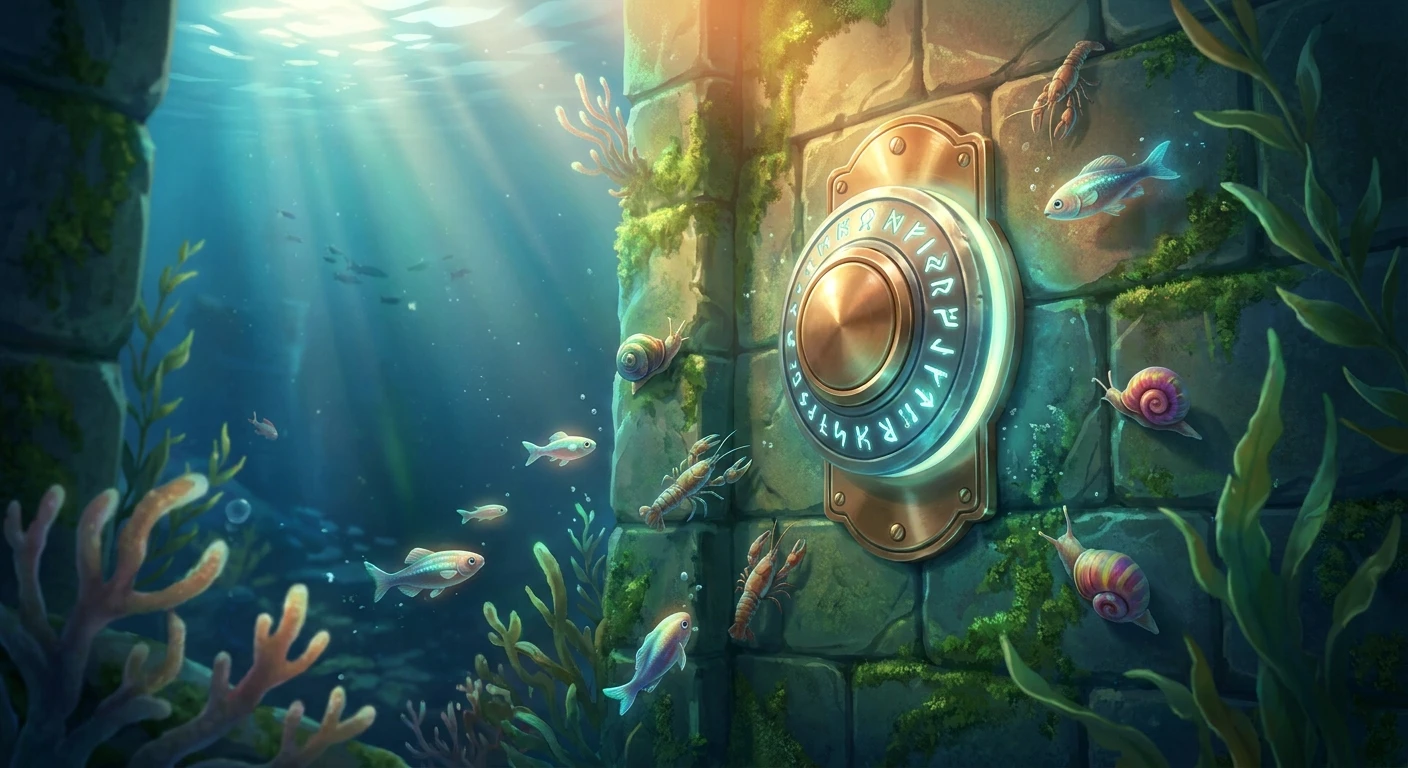
Why Everyone is Talking About the Fish Doorbell
Hey there, if you haven’t heard about the fish doorbell yet, you are seriously missing out on the most wholesome internet phenomenon of the entire decade. I was grabbing a coffee with an ecologist buddy back in Kyiv just yesterday. We were having an intense chat about how local conservation efforts in the Dnipro River desperately need an upgrade to protect spawning grounds from poachers and dams. Right in the middle of his rant, he pulled out his phone, laughed, and showed me a live stream from the Netherlands. My mind was completely blown. Imagine sitting at your desk in Ukraine, thousands of miles away, and actively helping a living creature cross a concrete dam just by tapping a digital button on your screen. That is the magic of this setup.
The premise is beautifully simple but carries a massive ecological impact, acting as a direct digital bridge between human awareness and wildlife survival. By watching a live underwater camera feed of a canal lock, absolutely anyone can spot waiting aquatic life and immediately alert the lock operator to open the heavy wooden gates. It is a massive win for nature conservation, entirely powered by crowdsourced human attention. In 2026, technology is finally moving past toxic doom-scrolling and genuinely giving us a chance to actively participate in global ecology right from our smartphones. Let me explain exactly how this brilliant system functions, why it matters so much, and how you can join the ranks of underwater traffic controllers right now.
How This Incredible System Actually Works
So, how exactly does this bizarre and wonderful mechanism actually operate on a daily basis? You might assume it requires highly complex artificial intelligence or expensive tracking chips, but the absolute beauty lies in basic human interaction. When the spring migration season hits, aquatic species instinctively need to move upstream to spawn and reproduce. However, human-made obstacles like massive boat locks completely block their natural path. They end up stuck in massive groups at the bottom of the lock gates, highly vulnerable to exhaustion and hungry predators. The brilliant solution? A rugged underwater camera placed right at the lock gates, broadcasting a crystal-clear live stream straight to the internet. When a dedicated viewer spots a congregation of scaly travelers waiting patiently, they press the digital bell. This sends a direct notification to the lock manager, who checks the feed and then manually opens the doors.
This crowdsourced methodology delivers unbelievable value for local ecosystems and city budgets alike. First, it radically reduces mortality rates. Without the bell, opportunistic predators like herons and cormorants literally just sit at the gates and feast on the trapped schools all day long. Second, it saves massive amounts of manual monitoring time and money for the local authorities. Instead of paying a municipal worker to stare at a blank screen 24/7 waiting for movement, hundreds of thousands of global volunteers happily do it for free. Here is a quick breakdown of the stakeholders involved and the amazing benefits they experience:
| Participant | Primary Role | Ecosystem Benefit |
|---|---|---|
| Internet Users | Monitor the live camera feed and press the digital bell | Provides 24/7 global surveillance without exhausting local municipal budgets |
| Lock Operators | Receive the alert and manually open the lock gates | Facilitates safe passage for migrating wildlife exactly when needed |
| Aquatic Species | Wait safely near the camera for the gates to open | Reach their spawning grounds quickly, ensuring healthy future populations |
Think about these three foundational reasons why this particular setup is so wildly successful and genius:
- It instantly connects millions of remote users to a tangible, real-world conservation effort, creating a massive global community of citizen scientists.
- It acts as a completely non-invasive tracking system, providing local biologists with extremely precise data on migration timing, species count, and overall river health.
- It emphatically proves that simple, low-tech web interfaces can still solve complex biological bottlenecks much more efficiently than over-engineered automated systems.
The tangible value is simply undeniable. Whether the camera catches a massive, intimidating pike or a tiny, shimmering roach, the system handles the underwater traffic perfectly, ensuring everyone gets home safe.
The Humble Origins of the Project
Where did this brilliant idea even come from originally? A few years ago, ecologists working in the Dutch city of Utrecht noticed a heartbreaking and recurring problem. Every single spring, thousands of migrating creatures would pile up at the historic Weerdsluis lock. This massive lock is primarily operated for heavy boat traffic, which is practically non-existent during the freezing early spring months. Because the giant wooden gates stayed tightly shut for weeks on end, the local wildlife was entirely stuck waiting. They essentially became an easy, all-you-can-eat buffet for diving birds. A local ecologist named Mark van Heukelum pitched a seemingly crazy, almost laughable idea to the city council: what if we just point a durable webcam at the murky water and let the internet tell us when to open the door? With a tiny budget, they rigged up a basic camera, built a remarkably simple website, crossed their fingers, and went live.
Evolution and Viral Success
Nobody on the team expected what happened next. The project exploded overnight, becoming a massive viral sensation. The initial municipal server literally crashed and burned on the first day because hundreds of thousands of curious people from Tokyo to Texas flooded the website, all desperately trying to ring the bell. The sheer volume of international traffic forced the technical team to rapidly upgrade their entire infrastructure. During this intense evolution phase, developers added digital queuing systems to prevent server overloads and seamlessly integrated educational pop-ups to teach international viewers about the different native species swimming past the lens. It rapidly morphed from a quirky local fix in a random canal into a massive global educational phenomenon. It proved beyond a shadow of a doubt that everyday people genuinely want to help nature if you simply give them an easy, fun, and engaging way to do it.
The Modern State in 2026
Fast forward to right now, and the platform is an absolute digital powerhouse. It has inspired countless copycat projects across various European waterways and even sparked serious discussions here in Ukraine about utilizing similar crowdsourced surveillance for the highly critical conservation of sturgeon in our own massive hydroelectric dams. The modern interface now features gorgeous high-definition night vision cameras, heavily moderated integrated chat rooms where hardcore fans trade screenshots of super rare species, and beautifully designed live data dashboards tracking the exact number of successful passages per season. It is no longer just a cute internet gimmick; it has become a legally recognized, vital piece of municipal ecological infrastructure that saves thousands of lives every single year.
Understanding Migration Bottlenecks
Let us get a little bit incredibly nerdy for a second. The deep biological imperative driving this whole fascinating phenomenon is scientifically known as potamodromous migration. That is basically just a fancy, multi-syllable scientific term for aquatic species that migrate entirely within freshwater river systems, usually moving huge distances from their rich feeding grounds to specific, shallow spawning areas. When the seasonal water temperature finally hits a very specific thermal threshold in the early spring, their internal biological clocks scream ‘go upstream right now!’ Human-made infrastructure like dams, weirs, and locks create what frustrated ecologists call ‘migration bottlenecks.’ These are harsh artificial choke points where the natural water flow suddenly changes, completely confusing the deeply ingrained navigation instincts of the schools. By deploying an underwater camera equipped with specialized polarized lenses and powerful infrared sensors for clear nighttime visibility, researchers can safely bypass this massive bottleneck. The camera itself uses a localized network protocol to rapidly transmit high-definition video frames with ultra-low latency, ensuring that the visual feed reaching your phone screen is as close to perfect real-time as physically possible.
Ecological Data Harvesting
The true, underlying scientific value of this platform goes way, way beyond just occasionally opening a wooden gate. The platform secretly acts as a massive, globally distributed citizen science data collection node. Every single time someone hits that bell, the backend system quietly logs a precise timestamp, the exact water temperature, and chunks of visual data. Here are some totally wild scientific facts researchers have successfully extracted from this amazing project over the years:
- The system accurately captures exact phenological shifts—meaning scientists can watch exactly how global climate change actively alters the timing of seasonal migrations year over year.
- It clearly documents highly complex predator-prey dynamics in artificial urban environments, showing how incredibly smart local birds adapt to wait just outside the camera’s blind spots.
- Marine biologists use the thousands of crowdsourced screenshots to rapidly identify diseased, heavily parasitized, or physically injured individuals, tracking the overall health of the entire regional watershed.
- The incredible infrared night vision data proved definitively that many shy species vastly prefer to migrate under the heavy cover of pitch-black darkness to safely avoid aerial predators, a complex behavior that was previously highly under-documented in shallow urban canals.
This massive, daily influx of rich crowdsourced data allows scientists to flawlessly track regional population health without ever having to pull a heavy net, stress the animals out, or manually tag a single fin.
Day 1: Set Up Your Viewing Station
Ready to officially become a certified, unpaid underwater traffic controller? I have put together a completely foolproof 7-day plan to seamlessly integrate this amazing, relaxing platform right into your daily routine. First things first, head straight over to the official website and bookmark it on your main browser. I highly recommend setting it up on a secondary computer monitor or an old iPad propped up on your desk. Keep the volume turned on relatively low so you can faintly hear the incredibly soothing ambient water sounds. It is surprisingly relaxing while you grind through your daily work emails.
Day 2: Learn to Identify the Locals
Do not just wildly smash the button at every passing shadow. Spend your entire second day carefully reviewing the site’s beautifully illustrated field guide. Learn the subtle visual differences between a common rudd, a spiky perch, and a slippery, snake-like eel. Knowing exactly what you are looking at makes the entire experience infinitely more intellectually rewarding and absolutely helps the busy lock operator know that your alert is totally legitimate and not just a piece of floating trash.
Day 3: Master the Peak Hours
You will very quickly notice that the underwater feed actually has intense rush hours just like a major city highway. Try to consciously log on during dusk or very early morning. These specific twilight periods are exactly when you are most likely to spot massive, swarming schools impatiently waiting at the gate, absolutely maximizing your personal ecological impact with a single, well-timed click.
Day 4: Join the Community Chat
There is a wildly thriving, hilariously passionate community of regular dedicated watchers. Jump headfirst into the accompanying social media groups, Reddit threads, or massive Discord servers. People love to share epic, high-resolution screenshots of massive, terrifying pikes or incredibly funny moments when a confused duck completely photobombs the underwater camera feed looking for snacks.
Day 5: Invite a Friend to Watch
Spread the joy and the mission. Text the direct link to a good buddy, a coworker, or a family member. I personally showed it to my young niece back in Kyiv, and she literally spent three straight hours intensely staring at the screen, desperately hoping to save a tiny migrating eel. It is the absolute perfect shared digital experience that actually matters.
Day 6: Try Night Shift Monitoring
The real, hardcore dedicated watchers intentionally log on at 2 AM. The camera automatically switches to a spooky, green night vision mode, and this is exactly when the really bizarre, elusive, monster-sized bottom-feeders finally come out of hiding. You truly feel like a dedicated wildlife night-watchman standing guard in the dark.
Day 7: Log Your Personal Stats
Keep a little physical notepad right next to your keyboard tracking how many times you successfully alerted the operator and the lock actually physically opened. It is profoundly, deeply satisfying to end your long work week knowing for a fact that you personally facilitated the safe passage of hundreds of living creatures to their generational spawning grounds.
Myths About the Platform
There is absolutely a lot of weird misinformation floating around social media right now about how this whole setup actually operates. Let me clear up the nonsense and noise right now.
Myth: The button is totally fake, does nothing, and just plays a pre-recorded YouTube video to make people feel good.
Reality: The video feed is 100% absolutely live. If you watch closely for more than five minutes, you will clearly see real-time local weather changes, random floating city debris, and totally unpredictable animal behaviors that simply cannot be faked or pre-recorded by anyone.
Myth: Hitting the bell automatically triggers the heavy metal gates to fly open on their own.
Reality: That would be a massive, terrifying public safety hazard! Your digital click actually sends a loud audio alert to a highly trained human lock operator. They manually check the live camera feed themselves to visually verify the absolute presence of wildlife before carefully overriding the massive gate system.
Myth: It is basically just a silly internet game with absolutely no real environmental impact whatsoever.
Reality: Highly credentialed local ecologists officially credit the system with saving tens of thousands of aquatic lives each and every single season. It drastically reduces predator bottlenecking at the gate and mathematically ensures robust, healthy spawning numbers upriver.
Myth: The bright camera lights highly disturb and blind the poor animals at night.
Reality: The camera specifically utilizes high-end infrared lighting technology. This specific light spectrum is entirely invisible to the aquatic wildlife, completely illuminating the dark water for human viewers without causing absolutely any biological stress or altering the animals’ natural swimming behaviors.
FAQ
Does it cost any money to use?
No, the entire platform is completely free for everyone globally and is fully funded by forward-thinking local municipalities and generous ecological research grants.
Can I easily access it on my phone?
Absolutely, the web interface is beautifully and fully mobile-optimized for seamless viewing anywhere you have a solid internet connection.
What if I press the button by mistake?
Do not panic at all. The professional human operator carefully verifies the video feed before taking any action, so accidental, clumsy clicks do not cause any harm or unnecessary gate openings.
Are there other cameras exactly like this in the world?
Yes! The massive, undeniable success of this project has directly inspired incredibly similar conservation projects across other European countries and even parts of North America.
How long is the actual migration season?
The absolute prime viewing window is typically from the freezing late winter weeks straight through to the very end of the warm spring season.
Can the camera clearly see in the dark?
It uses highly specialized, military-grade infrared lighting that perfectly illuminates the murky water without ever disturbing or blinding the sensitive local wildlife.
Why do they just wait there in the first place?
They literally hit the impenetrable physical barrier of the closed lock doors and instinctively gather together, patiently waiting for the current to change or a magical path to somehow open up.
Do I need to make an annoying account to participate?
Not at all. You just load up the webpage, watch the stream, and click the bell completely anonymously without handing over any personal data.
What specific species am I most likely to see?
Depending on the exact month, you will see massive schools of roach, bream, huge predatory pikes, and occasionally incredibly rare European eels sliding across the bottom.
How quickly does the lock actually open after pressing?
It heavily depends on the operator’s current workload and local boat traffic, but successful openings usually happen within 10 to 15 minutes of a verified alert.
The fish doorbell is honestly an absolute masterpiece of modern internet culture perfectly mixed with genuine, boots-on-the-ground ecological action. It magically takes the mindless, depressing web scrolling we are all incredibly guilty of and wonderfully redirects it into a highly localized, literally lifesaving conservation effort. Seriously, stop reading this article right now, open up a brand new browser tab, find the stream, and go ring that bell!








One Response