

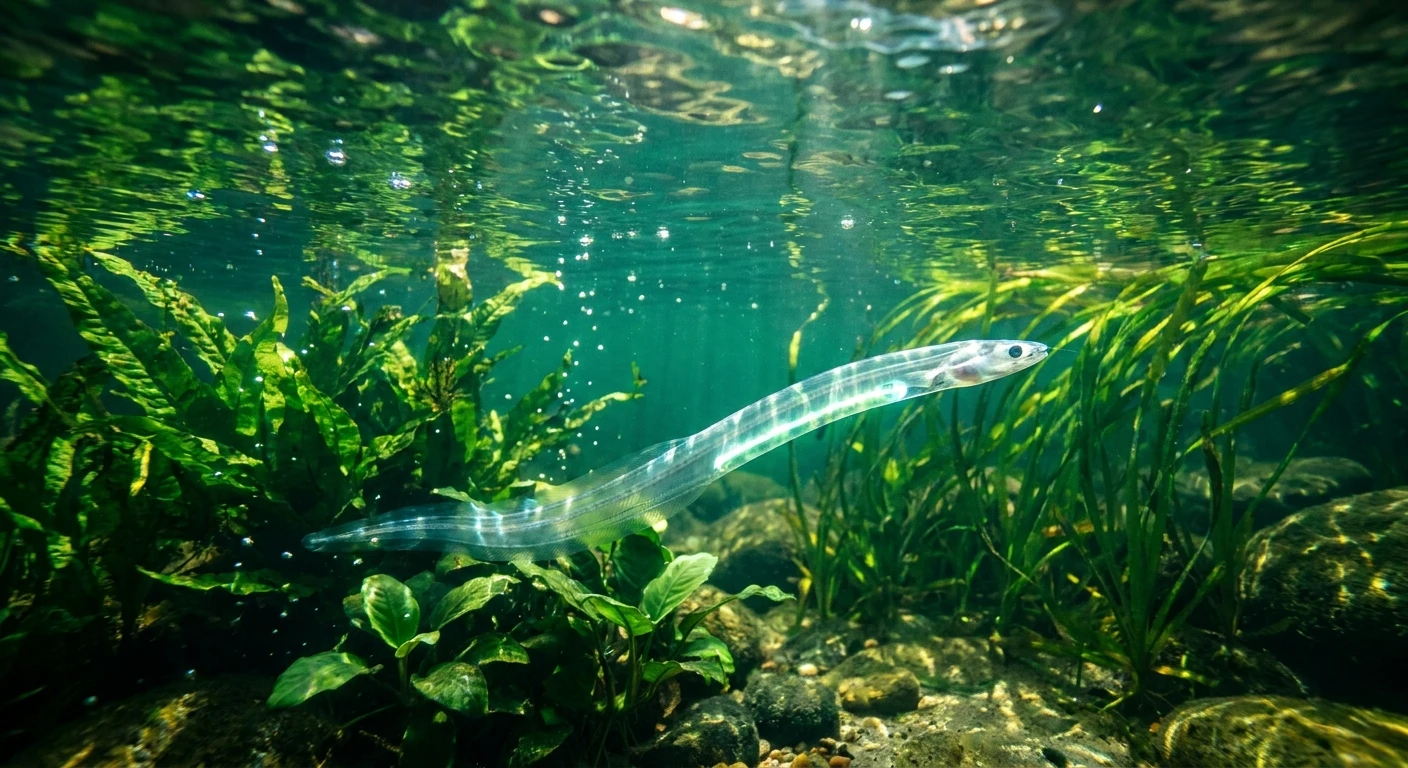
Breaking eels news: Why We Need to Pay Attention
Did you hear the latest eels news that dropped this morning? We are facing a critical turning point for these mysterious aquatic creatures, and staying relentlessly informed is the only way we can reverse the immense damage done to their natural habitats. Let me tell you a quick story. Back in my hometown near the Dnipro river in Ukraine, my grandfather used to tell me wild, unbelievable stories about spotting European eels navigating the heavy currents after massive spring rains. He would spend hours detailing how these ancient survivors traveled thousands of miles from the deep Atlantic ocean just to reach our local streams. They were like slippery ghosts, popping up when you least expected it. Today, getting a mere glimpse of one in those exact same waters feels almost impossible. The sheer drop in their population over my lifetime is staggering, which is exactly why I’ve been obsessively tracking their migration patterns and habitat changes. We can’t just sit back and watch them vanish without putting up a fight. Right now, local conservationists in Kyiv are teaming up with international marine biologists to trace exactly where these creatures are slipping away to. The updates are constantly pouring in, and honestly, the ecological data from 2026 is both shocking and a little bit hopeful. Let me give you the full, unfiltered rundown on exactly what is going on with these fascinating fish right now.
Why should we even care about tracking these slithery fish so closely? The absolute core benefit of keeping up with environmental updates is that they act as the ultimate bio-indicators for our local and global water systems. Think of them as the canary in the coal mine for our rivers. If they are thriving and reproducing, our rivers are incredibly healthy. If they are dying off rapidly, we have a massive, immediate pollution problem on our hands that will eventually affect human communities too. Understanding their complex lifecycle gives us a direct, undeniable blueprint for cleaning up our waterways effectively.
Read also: The Ultimate Fish Doorbell Guide; Discovering willis island A Coral Sea Marvel.
For example, when conservationists recently noticed a severe spike in mortality rates near several industrial zones, they were able to quickly pinpoint chemical runoffs that were also quietly contaminating local municipal drinking water sources. By saving the fish, they protected the people. Another clear, undeniable example is how specific dam removals, initiated entirely to help them migrate freely, ended up restoring entire local ecosystems. These removals brought back native bird populations, revitalized plant species, and naturally cleaned the riverbeds.
Here is a quick breakdown of their current environmental standing:
| Conservation Status | Primary Impact Area | Urgent Required Action |
|---|---|---|
| Critically Endangered | Freshwater Rivers & Streams | Remove artificial barriers and obsolete dams |
| Stable but Vulnerable | Coastal Estuaries | Monitor industrial pollution and salinity levels |
| Slowly Recovering | Protected Wetland Zones | Strictly enforce anti-poaching fishing bans |
To actively support these ongoing initiatives, you need a highly specific action plan. Here is exactly how you can jump in and directly help:
- Support Barrier Removal Projects: Actively advocate for the dismantling of obsolete, dangerous dams that entirely block natural migration routes.
- Monitor Local Water Quality: Join a community-led science project to rigorously test the rivers and lakes right in your immediate neighborhood.
- Report Illegal Fishing Activities: Immediately contact local wildlife authorities if you spot any unauthorized, sketchy glass eel harvesting operations.
- Adopt Sustainable Seafood Choices: Flat out refuse to buy uncertified, wild-caught products at your local sushi restaurants or neighborhood seafood markets.
The Mysterious Origins of the European Eel
Let me tell you, the history behind these creatures is wilder than any fiction novel. For centuries, absolutely nobody had ever seen them breed or lay eggs. The legendary philosopher Aristotle famously documented that he thought they literally emerged spontaneously from the mud at the bottom of lakes, like magic earthworms. It took scientists completely baffling centuries just to figure out where they actually came from. We now know their absolute origin point is the Sargasso Sea, a strange, floating algae-filled region in the middle of the Atlantic Ocean. Every single one of them originates there, which is a fact that still blows my mind every time I think about it.
The Bizarre Evolution of Their Lifecycle
Their evolution is nothing short of a biological masterpiece. They start out as tiny, transparent, leaf-like larvae drifting aimlessly on ocean currents for years. Then, they magically transform into clear glass eels, pushing their way into freshwater rivers. From there, they morph into yellow eels, living secretly in muddy riverbeds for decades. Finally, they shift into silver eels, their eyes growing massively large and their stomachs dissolving to prepare for one final, epic journey back across the ocean to breed and die. How they evolved to effortlessly switch between saltwater and freshwater environments remains one of nature’s greatest biological marvels.
The Modern State of Eel Populations
Fast forward to our current era, and things are looking grim. Overfishing exploded in the late 20th century. A highly lucrative black market for glass eels emerged, heavily driven by international culinary demands. This modern greed brought them right to the very brink of complete extinction. However, conservation science is frantically trying to catch up. Across Europe and parts of Asia, strict quotas and intense monitoring programs are finally starting to turn the tide. The situation is dire, but the fight to save them is stronger than ever before.
Decoding the Leptocephalus Larval Stage
I know “Leptocephalus” sounds like a terrifying dinosaur species, but it literally just translates to “flat head.” This is their incredibly weird, completely transparent larval stage. Imagine a tiny piece of clear tape swimming through the ocean—that is exactly what they look like. To survive moving from salty oceans to fresh rivers, they use a biological mechanism called osmoregulation. Let me explain it simply: they essentially have highly specialized gills that act like custom, high-tech water filters, constantly adjusting the internal salt balance in their blood so their cells do not explode. It is a seamless, automatic transition that human engineers could only dream of perfectly replicating.
Understanding Otolith Microchemistry
What on earth is an otolith? They are microscopic ear bones found inside the fish’s head. Marine biologists use these tiny stones exactly like tree rings. By shooting highly focused microscopic lasers at these ear stones—a process known as mass spectrometry—scientists can accurately tell exactly what kind of water the fish lived in on literally any given day of its life. It acts basically as an unbreakable biological GPS tracking device, recording temperature, salinity, and location data directly into bone.
Here are some absolutely incredible scientific facts about them:
- Their raw blood contains a highly toxic protein that can violently cramp mammalian muscles, but simply cooking it neutralizes the toxin completely, making it perfectly safe to eat.
- They can absorb oxygen directly through their moist skin, allowing them to slither straight across wet grass to bypass massive river obstructions like waterfalls or fallen trees.
- A single, fully mature female can remarkably carry up to 3 million microscopic eggs during her final, exhausting migration back to the Sargasso Sea.
- They navigate using an internal biological compass called magnetoreception, meaning they can literally feel the Earth’s invisible magnetic field to effortlessly find their way home across completely featureless oceans.
Day 1: Audit Your Seafood Consumption
Do not just nod along to this information; take action right now. Start by brutally auditing exactly what you eat. Check your local sushi spot’s sourcing. If they are serving unagi that is not explicitly labeled as sustainably farmed or responsibly sourced, you need to stop ordering it immediately. Your wallet dictates market demand.
Day 2: Educate Your Immediate Circle
Word of mouth is your strongest weapon. Take everything you just learned today and share these fascinating facts with your friends and family. Send them the link to this exact post. Make them realize that saving our rivers starts with understanding the creatures that inhabit them.
Day 3: Identify Local Waterways
Open up a digital map right now. Where is your nearest river, stream, or creek? Does it eventually flow out to the sea? Understanding your local geography intimately connects you to the broader, global water network that these fish rely on for their epic migrations.
Day 4: Join a River Cleanup Initiative
Plastic waste and dumped trash physically block critical habitats. Find a local community group and spend a Saturday morning picking up garbage along your local riverbanks. Clear, clean water is absolutely essential for their sensitive gills and skin.
Day 5: Donate to Conservation Funds
If you have a little extra cash, throw some support behind reputable, hard-working organizations. Groups like the Sustainable Eel Group are constantly fighting on the legislative front lines, and even a small five-dollar donation helps fund crucial scientific tracking equipment.
Day 6: Advocate for Dam Removals
Obsolete, crumbling dams do nothing but destroy aquatic ecosystems. Find out if there are useless artificial barriers in your region. Sign local petitions, write fiery emails to your local city council representatives, and demand that these useless concrete walls be torn down immediately.
Day 7: Become a Citizen Scientist
You do not need a Ph.D. to gather data. Download nature tracking apps on your phone. If you are ever hiking near water at night and spot one, log the location. Scientists desperately rely on everyday people to report wildlife sightings to build comprehensive population maps.
Myth: Eels are basically just weird water snakes.
Reality: They are completely, 100 percent classified as actual fish. They possess gills and small fins, despite their highly elongated, snake-like bodies tricking the human eye.
Myth: They naturally reproduce in freshwater rivers and local lakes.
Reality: Every single European and American eel is born far away in the deep saltwater of the Sargasso Sea, migrating to freshwater strictly to grow and mature, never to breed there.
Myth: Eel blood is completely harmless to humans.
Reality: It is extremely toxic to humans and other mammals if ingested raw. This is the exact reason why you will never, ever see it served as uncooked sushi at any legitimate restaurant.
Myth: The population is fine because we easily see them on restaurant menus everywhere.
Reality: The immense culinary demand is actually driving illegal, multi-million dollar trafficking rings, pushing the species toward critical endangerment.
Are eels actually dangerous to humans?
Not at all. They are incredibly shy, secretive creatures that will actively avoid any contact with humans swimming or wading in their waters.
How long do they typically live?
They have astonishing lifespans. Some heavily documented captive individuals have lived for well over 80 years!
Can they really travel over dry land?
Yes, absolutely. On particularly wet, rainy nights, they can easily slide across damp grass to bypass physical blockages in their rivers.
Why is the Sargasso Sea so incredibly important?
Because it is their one and only known breeding ground on the entire planet. Without it, the species completely collapses.
What exactly is a glass eel?
It is the juvenile, completely transparent stage of their lifecycle when they first aggressively enter freshwater rivers from the ocean.
Are electric eels actually part of the same family?
Surprisingly, no! Electric eels are actually knifefish, an entirely different biological species native to South America.
Why are they so extremely expensive at restaurants?
Because they cannot be successfully bred in captivity. Every single farm stock must be caught wild from the ocean, making them a heavily finite resource.
How big can they realistically get?
Fully mature European females can impressively grow up to a meter and a half long before beginning their final migration.
Wrapping up this extensive look into our complex aquatic ecosystems, staying constantly updated helps us forcefully protect our fragile environment. Do not just read and scroll away. Drop a comment below, share this massive guide with your network, and let’s fiercely protect our rivers together!