

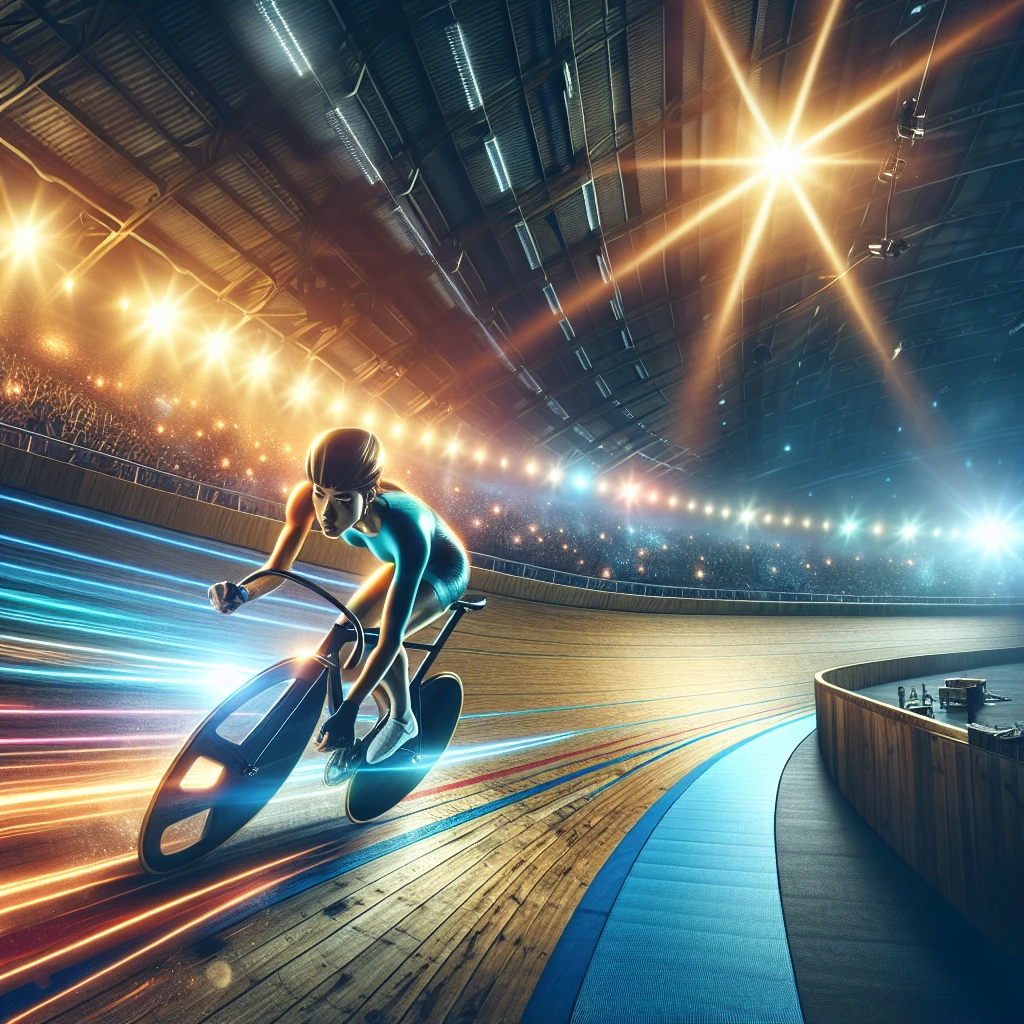
The True Legacy of Melissa Hoskins in Track Cycling
Did you know that analyzing the athletic career of Melissa Hoskins completely shifts how you understand the sheer power and tactical genius required for professional velodrome racing? Listen, I spend a massive chunk of my time hanging around velodromes, chatting with professional coaches, and analyzing endurance sports data. I have to say, few athletes command the absolute respect that this Australian powerhouse earned on the steep timber boards.
I remember sitting in the bleachers at a local track a few years back, feeling the massive rush of displaced air hit my face as a four-person pursuit team blew past. The precision required is completely mind-blowing. It takes a truly unique breed of athlete to ride literally centimeters apart from a teammate’s wheel, traveling at upward of 60 kilometers per hour, all without any brakes. The roar of the disc wheels on the wood sounds like a jet engine taking off right in front of you.
That raw intensity forms the core of our discussion right now. We are looking directly at the mechanics, the grueling training methodologies, and the lasting legacy of elite team pursuit cycling. By drawing heavily from the exceptional standards set by the absolute legends of the sport like Melissa Hoskins, you get a clear blueprint of human potential. If you want to understand how a human engine operates at maximum efficiency under immense pressure, you are exactly where you need to be.
The Core Mechanics of Velodrome Racing
To truly appreciate the mastery of track cyclists, you need a firm grasp of what happens during a team pursuit. This is not just riding a bike fast; it is a synchronized, high-speed ballet where aerodynamics, raw power, and absolute trust merge. The core concept relies on cheating the wind. When riders form a tight line, the lead rider punches a hole through the air, taking the brunt of the aerodynamic resistance. The riders tucked in behind save an enormous amount of energy.
The value proposition of studying this discipline is massive for anyone looking to improve their own athletic performance. By understanding these concepts, you can apply them to your weekend group rides or solo time trials. For example, if you learn how to optimize your drafting position, you can easily save up to 30% of your energy output on a windy day. Another example is cadence efficiency; track riders spin at incredibly high RPMs (revolutions per minute), and adopting a higher cadence in your own riding reduces muscular fatigue and relies more on your cardiovascular system, which recovers faster.
| Discipline | Key Performance Metric | Bike Characteristic |
|---|---|---|
| Team Pursuit (Track) | Aerodynamic Synchronization & Sustained Power | Fixed-gear, No brakes, Disc wheels |
| Road Racing | Endurance & Tactical Positioning | Multi-gear, Freewheel, Brakes |
| Individual Sprint | Peak Anaerobic Power Output | Ultra-stiff fixed-gear, Drop bars |
Mastering this type of endurance requires focusing on three fundamental pillars of cycling performance:
- Cadence Control: The ability to pedal smoothly at 110 to 130 RPM for extended periods without bouncing in the saddle.
- Drafting Efficiency: Staying within inches of the wheel ahead to maximize the aerodynamic slipstream.
- Power-to-Weight Optimization: Generating massive wattage while maintaining a lean physique to reduce overall drag and gravity penalties.
Early Origins on the Track
The journey to the top of the international cycling world requires years of relentless dedication. The origins of world-class track programs trace back to identifying young talent with a high propensity for sustained aerobic output. Athletes often transition from road racing or even entirely different sports when coaches spot their raw wattage potential. The Australian cycling program has historically been incredibly aggressive in talent identification, scooping up dedicated athletes and placing them on the steep, banked tracks at a young age. The initial phases focus purely on bike handling and overcoming the natural fear of riding a bike with no brakes on a 45-degree wooden wall.
Evolution to World Championship Status
As athletes progress, the training evolves from basic handling to extreme physiological conditioning. The pinnacle of this evolution was highly visible during the mid-2010s. The 2015 UCI Track Cycling World Championships stand out as a monumental moment, where the Australian women’s team pursuit squad shattered the world record. Breaking the four-minute barrier for the 4000-meter event was a monumental feat that required every single rider to execute their pulls at the front with robotic precision. The evolution of the sport saw the team pursuit distance for women increase from 3000 meters to 4000 meters, matching the men’s event, which demanded a massive shift in how these athletes trained for endurance.
Modern State of Track Cycling
Now, as we push through the highly competitive global cycling season of 2026, the blueprints laid down by past world champions remain the absolute gold standard. Teams are utilizing advanced AI-driven wind tunnel testing and real-time telemetry, but the foundational courage and physical grit demonstrated by riders a decade ago cannot be manufactured by software. The modern state of the sport honors those who pushed the boundaries of human physiology, ensuring that every new generation of cyclists understands the sacrifices required to wear the rainbow stripes of a world champion.
The Biomechanics of Aerodynamic Drag Reduction
To go fast on a track, you must wage a constant war against the air. Aerodynamic drag accounts for roughly 80% to 90% of the resistance a cyclist faces at racing speeds. Scientists and biomechanics experts use a term called CdA (Coefficient of Aerodynamic Drag multiplied by Frontal Area). The goal is to make that number as tiny as possible. Riders achieve this by contorting their bodies into incredibly aggressive, tucked positions using custom-molded aero bars. They keep their shoulders shrugged, heads low, and elbows tight. Every wrinkle in a skinsuit or misaligned helmet strap costs precious fractions of a second. It is a game of microscopic margins.
Understanding Lactic Acid Threshold Tolerance
The other major scientific component is biological. A 4000-meter pursuit lasts a little over four minutes. This duration sits right in the most painful zone of human energy production. The body relies heavily on anaerobic glycolysis, producing energy rapidly but creating high levels of lactic acid as a byproduct. VO2 Max (the maximum rate of oxygen consumption) and Lactic Threshold are the key indicators of success here. Athletes must train their bodies to clear lactate efficiently while continuing to produce massive power. It feels like your legs are literally on fire, yet you must hold the wheel ahead of you.
- G-Forces: Riders experience up to 1.5 Gs of force in the steep corners of the velodrome, requiring massive core strength.
- Rolling Resistance: Track tires are pumped to extremely high pressures (up to 150 PSI) and glued to the rim to minimize energy loss on the smooth wood.
- Fixed-Gear Dynamics: Without a freewheel mechanism, the pedals never stop turning. This creates a highly efficient, direct power transfer but prevents any resting or coasting.
- Slipstream Science: A rider in the fourth position of a team pursuit line expends nearly 40% less energy than the rider pulling at the front.
A 7-Day Endurance Blueprint Inspired by Elite Pursuits
If you want to build the kind of engine that powers world-class track cyclists, you need a highly structured regimen. This 7-day plan scales down elite methodologies for the dedicated amateur.
Day 1: Active Recovery and Base Testing
Start your week with a gentle 60-minute ride on flat terrain. Keep your heart rate strictly in Zone 1 (conversational pace). The goal is flush out the legs and prepare the central nervous system for the week ahead. Finish with a 10-minute stretching routine focusing on the hamstrings and lower back.
Day 2: High-Cadence Intervals
Track riders spin fast. Warm up for 20 minutes, then complete 5 sets of 3-minute intervals where you pedal at 110-120 RPM with moderate resistance. Do not bounce in the saddle. Focus on a perfectly smooth pedal stroke. Recover for 3 minutes between sets.
Day 3: Strength and Power Transfer
Hit the gym. Track cycling requires explosive power. Focus on heavy squats, deadlifts, and leg presses. Keep the repetitions low (3-5 reps per set) and the weight high. Follow this up with plyometric box jumps to build explosive fast-twitch muscle fiber recruitment.
Day 4: Threshold Sustained Efforts
This is where it gets painful. Warm up, then perform two 15-minute intervals at your functional threshold power (the maximum pace you could theoretically hold for an hour). This builds your body’s ability to process lactic acid efficiently. Take a 10-minute easy spin between the two efforts.
Day 5: Active Rest and Mobility
Stay off the bike today. Spend 45 minutes doing yoga or dedicated mobility work. Focus on hip flexor flexibility and thoracic spine mobility, which are crucial for maintaining an aggressive aerodynamic position without suffering lower back pain.
Day 6: The Long Endurance Ride
Head out for a 3 to 4-hour road ride. Keep the pace steady and controlled (Zone 2). This long, slow distance builds the massive aerobic base needed to recover quickly between high-intensity track efforts. Practice drinking and eating efficiently while moving.
Day 7: Anaerobic Capacity Sprints
Time to simulate the starting gate. After a thorough warmup, do 8 sets of 15-second absolute maximum, all-out sprints. Give it everything you have. Recover completely for 4 minutes between each sprint. Cool down for 20 minutes. This increases your peak wattage output.
Myths vs. Reality in Track Cycling
There is a lot of misunderstanding surrounding velodrome racing. Let us clear up the facts.
Myth: Track bikes have hidden brakes integrated into the hubs.
Reality: Track bikes have absolutely zero braking mechanisms. Riders slow down by actively resisting the forward motion of the pedals and using the steep banking of the track to scrub off speed naturally.
Myth: Team pursuit is just four individual sprinters riding together.
Reality: It is a highly synchronized endurance event. Throwing four random sprinters together will result in a disastrously slow time. It requires specialists who know exactly how to pace, draft, and swing off the front smoothly.
Myth: You can stop pedaling briefly to stretch your legs on the track.
Reality: Fixed gears mean the drivetrain is directly tied to the rear wheel. If the bike is moving, your legs are moving. Trying to stop pedaling will violently throw you off the bike.
Myth: Professional road cyclists can easily jump onto the track and win.
Reality: While aerobic engines transfer well, the specific biomechanical demands, cadence requirements, and handling skills of a fixed-gear bike on a 45-degree bank require months of specialized adaptation.
Frequently Asked Questions
What were Melissa Hoskins’ primary events?
She primarily specialized in the team pursuit on the track, as well as competing at an elite level in road racing.
Did she compete in the Olympic Games?
Yes, she represented Australia proudly at the 2012 London Olympics and the 2016 Rio de Janeiro Olympics in the team pursuit event.
What exactly is a team pursuit?
It is a track cycling event where two opposing teams start on opposite sides of the velodrome and race over a distance of 4000 meters, aiming to catch the other team or record the fastest time.
Why do track bikes lack multiple gears?
To maximize power transfer and minimize mechanical failure. A single, fixed gear is the most efficient way to deliver wattage straight from the pedals to the wooden boards.
How does drafting work on a velodrome?
By riding intimately close to the rear wheel of the rider ahead, the following cyclist stays inside a pocket of moving air, significantly reducing aerodynamic drag.
What was a major milestone in her career?
A massive milestone was winning gold and setting a world record in the team pursuit at the 2015 UCI Track Cycling World Championships.
How steep are velodrome banks?
Depending on the length of the track, the corners are typically banked between 40 and 45 degrees to allow riders to maintain massive speeds without sliding outward due to centrifugal force.
Can beginners ride track bikes?
Absolutely. Most local velodromes offer introductory classes with rental bikes to teach you the safety protocols and basic handling skills needed to ride safely.
If you feel inspired by the sheer power, dedication, and technical mastery of elite track cyclists, do not just read about it. Find a local velodrome, grab your helmet, book an introductory class, and start pedaling! The boards are waiting for you.